


Midcentury modern bathrooms have a way of feeling nostalgic and fresh at the same time. Warm walnut, geometric tile, globe lighting, and simple fixtures bring plenty of personality, but the clean lines keep the room from looking like a time capsule.
If you are renovating an older bathroom or simply want to add a little 1960s character to a newer space, these ideas offer practical places to begin. You can also explore the history behind midcentury modern style for more context.
Below are 26 midcentury modern bathroom renovation ideas, ranging from small cosmetic changes to larger layout features. The goal is not to copy a period room exactly, but to combine authentic materials and shapes with the comfort, storage, and durability a bathroom needs today.
1. Build the Room Around a Confident Retro Color

Burnt orange, avocado green, mustard, teal, and powder blue all belong naturally in a midcentury palette. Choose one as the main character and let quieter materials support it. A colorful tile wall looks much more considered when it is balanced by warm wood, cream paint, and simple metal fixtures.
If a full wall feels like too much, introduce color through a vanity, shower niche, or narrow backsplash. Repeating the same shade in a towel or piece of artwork helps the choice feel intentional.
2. Mix Walnut, Stone, and Ceramic

Natural materials stop a retro bathroom from feeling theatrical. Walnut or teak cabinetry provides warmth, while stone and ceramic add the durable surfaces needed around water. The slight variation in real wood grain also softens the precise geometry of tile and metal.
Use moisture-resistant finishes and keep exposed wood away from standing water. A stone or solid-surface countertop can protect the vanity while preserving the warm, organic look.
3. Choose Minimal Fixtures With Clear Function

Midcentury fixtures are usually simple rather than ornate. Look for clean spouts, uncomplicated controls, rounded corners, and finishes such as brushed brass, chrome, or matte black. A wall-mounted faucet can make a small vanity feel more open, provided the basin and plumbing are planned together.
Keep the number of finishes restrained. Two coordinated metals can work, but repeating one finish across the faucet, mirror, lighting, and hardware creates the calmest result.
More Finds You Might Like

◄ MATERIAL ► SUS 304 Stainless Steel construction, With stamped steel mounting bracket. Towel bar is designed to be corrosion resistant.

Modern & Stylish Oval Design: Combining a unique oval shape with a modern stylish look, this oval bathroom mirror easily refreshes your space. Perfect for entryway, bathroom, bedroom, and living room—making your space creative and unique.

Wall Mount Kitchen Faucet: 8-inch center commercial faucet with 7.4 inch gooseneck switch spout nozzle. Laundry faucet. Easy to match with your stainless steel/ceramic/acrylic/crystal stone or prepared utility sink, kitchen sink faucet.
4. Use Geometric Tile as a Focal Point

Hexagons, scallops, diamonds, and repeating circles can give a bathroom instant midcentury energy. The strongest designs usually concentrate pattern in one area—the shower wall, backsplash, or floor—rather than covering every surface.
Let the grout support the pattern instead of fighting it. A close tonal match feels softer, while contrasting grout emphasizes every line and works best with a very precise installation.
More Finds You Might Like

Cloud-Like Comfort & Style: Step onto our super soft waffle bath mat! Its chic boho design feels like a warm hug for your feet. Perfect for farmhouse decor, it turns your bathroom into a cozy, spa-like retreat. You will love starting your day this way

MODERN WALLPAPER-Size:17.3” ×78.8” (9.45 Square Feet / Roll). Material: Vinyl / PVC Beige peel and stick wallpaper

UV7 3D printing technology, with bright colors that can last for more than 5 years.We recommend installing indoors as this can maximize the lifespan of the window film
5. Add a Few Genuine Vintage Accessories

A bathroom does not need to be filled with collectibles to suggest the era. One vintage mirror, ceramic vessel, wall clock, or pair of period-inspired sconces can establish the mood without creating clutter.
Choose pieces that can tolerate humidity and still serve a purpose. Functional accessories generally feel more convincing than objects added only to fill a shelf.
6. Install a Floating Wood Vanity

A floating vanity shows more floor and can make a compact bathroom appear wider. Walnut, teak, and oak all suit the style, especially when the cabinet fronts are flat and the hardware remains discreet.
Do not sacrifice useful storage for a delicate silhouette. Deep drawers around the plumbing are often more practical than doors, and they keep toiletries from collecting on the countertop.
More Finds You Might Like
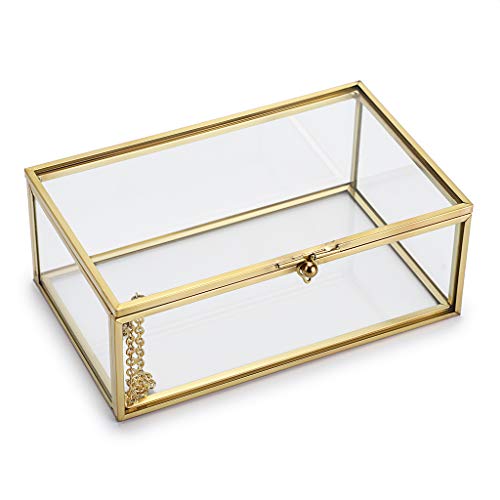
Product Infos - Size: (L*W*H) :5.7"x 3.54"x 2.36 " ; Please clean the ring box with glass cleaner and soft cloth( Jewelry and accessories are NOT included ! Please pay attention to the size before purchasing)

Multi Layer Storage Structure: This acacia wood qtip holder belongs to double-layer bathroom jars with lids set, split into upper and lower independent storage space to separate cotton swabs, cotton pads, hair ties and makeup remover bits, sorting small bathroom supplies without messy mixing.

Charming Wall Cabinet: The Arendahl jewelry wall cabinet provides function and style with decorative charm due to its arched shape and mirrored face
7. Make the Lighting Part of the Architecture

Globe sconces, cone shades, and opal glass pendants are recognizable midcentury forms, but placement matters as much as shape. Lighting on both sides of a mirror produces more even illumination than a single fixture overhead.
Combine flattering task lighting with a dimmable ceiling light for flexibility. Warm bulbs complement walnut and earthy tile, while adequate brightness keeps the bathroom functional.
More Finds You Might Like
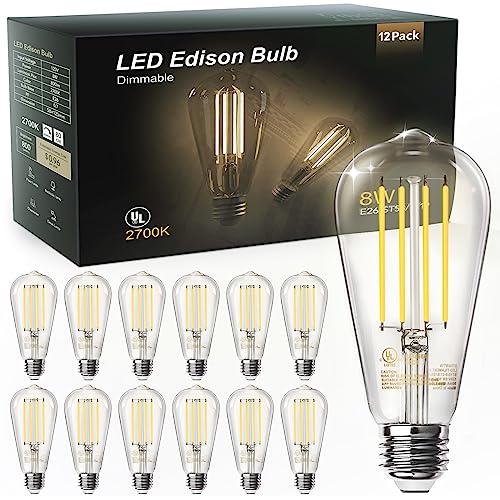
【Classic Edison Style – Vintage Decorative Design】Inspired by the timeless look of classic Edison bulbs, this E26 LED bulb features a warm glow and exposed filament design for a vintage-inspired aesthetic. The decorative style adds character to chandeliers, pendant lights, ceiling fans, wall sconces, lanterns, and table lamps with a standard E26 medium base. Ideal for living rooms, bedrooms, dining areas, bathrooms, porches, entryways, cafes, bars, and other vintage or industrial-style spaces.

【6000mAh Rechargeable Battery Per Bulb — 12,000mAh Total for the Set】Each bulb is powered by a true 6000mAh rechargeable battery — not a combined figure. That’s 12,000mAh across both bulbs, giving you up to 13 hours on max brightness and up to 60 hours on low brightness per full charge. USB-C charging included — no disposable batteries needed. Reliable lighting that lasts. Note: Fully charge before first use. Charge in a dry environment, keep away from moisture.

【Effortless Wireless Setup】Brightown battery operated wall sconces set of two come with 2 E26 USB rechargeable LED bulbs and 2 detachable magnetic bases. Completely wire-free and outlet-independent, they can be fully installed in just 20 minutes. Boasting a sleek modern look, this sconces wall decor set of 2 effortlessly upgrades your indoor wall decor and living space ambiance.
8. Hide Modern Technology Inside the Design

Heated floors, demisting mirrors, quiet ventilation, and efficient shower controls make a renovated bathroom far more comfortable. The trick is to integrate them without letting screens and controls dominate the room.
Choose compact controls in finishes that relate to the other hardware, and place outlets where cords can be hidden. Modern convenience should support the design rather than becoming the main visual feature.
9. Create a Spa Feeling With Restraint

A spa-like bathroom does not require an enormous room. Soft towels, a generous showerhead, warm indirect light, and one or two plants can change the atmosphere without taking up much space.
Keep surfaces relatively clear and repeat a small palette of wood, stone, green, and cream. The sense of calm comes from visual order as much as from luxurious fixtures.
10. Keep Open Shelving Edited and Useful

Open walnut shelves can introduce warmth and make frequently used items easy to reach. They work best when the display is limited to folded towels, a few containers, and perhaps one plant or ceramic piece.
Use closed storage for the less attractive necessities. Leaving a little empty space around objects helps the shelving feel architectural rather than crowded.
11. Soften Straight Lines With Curves

Rounded mirrors, oval basins, curved tubs, and globe lights soften the boxy surfaces found in most bathrooms. A few repeated curves create rhythm and make the room feel more welcoming.
You do not need every feature to be rounded. Curves are most effective when they contrast with simple cabinetry, straight grout lines, and rectangular architecture.
12. Plan Storage Around Real Bathroom Routines

Good storage should follow the way the bathroom is actually used. Keep daily items near the sink, towels close to the shower, and cleaning products in a separate closed compartment.
A tall linen cabinet can provide substantial storage without consuming much floor space. Flat walnut doors, slim pulls, and consistent drawer lines allow practical cabinetry to support the midcentury look.
13. Include Art That Can Handle Humidity

Abstract prints, botanical forms, and simple geometric artwork can make a bathroom feel connected to the rest of the home. Use sealed frames or moisture-tolerant pieces, and avoid placing valuable originals where condensation is likely.
One substantial piece usually has more impact than several small frames. Pulling a color from the tile or towels will help the artwork feel integrated.
14. Use Black and White as a Graphic Base

Black and white tile creates the crisp contrast associated with many midcentury interiors. Natural wood keeps the combination from feeling cold, while a small amount of brass or chrome adds brightness.
Limit the pattern to one main plane if the room is small. A graphic floor with plain walls often feels more spacious than pattern on every surface.
15. Make the Renovation More Resource-Conscious

The most sustainable renovation often begins by keeping what still works. A solid vanity can be refinished, durable tile may only need new grout, and quality vintage lighting can sometimes be rewired by a professional.
When replacement is necessary, prioritize water-saving faucets, efficient lighting, durable surfaces, and materials that can be repaired. Long life matters more than adding products labeled as green.
16. Pair Soft Green Tile With Warm Wood

Muted green tile and walnut are an especially dependable combination. Green feels restful and relates naturally to plants, while warm wood prevents the room from becoming too cool or clinical.
Use cream, sand, or warm white for towels and countertops. Those quiet neutrals give both materials room to stand out without adding another competing color.
17. Consider a Sunken Tub Only When the Layout Allows It

A sunken tub can recall the luxurious bathrooms of the 1960s and 1970s, but it requires careful structural and safety planning. The rim, faucet, drainage, waterproofing, and access steps all need to function as a complete system.
If the layout is unsuitable, a low-profile freestanding tub can provide a similar visual effect with fewer construction complications. Either option looks at home beside terrazzo or small-format tile.
18. Bring Back Terrazzo in a Controlled Way

Terrazzo adds color and movement while still reading as a durable architectural surface. Use it on the floor, countertop, or one shower wall rather than everywhere at once.
Choose a mix containing two or three colors already used elsewhere in the room. This makes the terrazzo feel connected to the tile, wood, and metal finishes instead of appearing random.
19. Give a Floating Vanity an Authentic Retro Finish

Walnut and teak give a floating vanity immediate period character. Flat drawer fronts, book-matched grain, and slim pulls are usually enough; tapered legs and decorative trim are unnecessary when the cabinet is wall-mounted.
Pair the vanity with a simple countertop and a correctly scaled basin. Leaving a visible band of floor beneath it creates the light, open effect that makes this style so useful in smaller bathrooms.
20. Use Orb Lighting Without Overcrowding the Mirror

Opal globes provide the soft, diffused glow associated with midcentury interiors. Position a matching pair beside the mirror or use one pendant in a safe dry location, keeping electrical clearances and local bathroom codes in mind.
Scale is important. Fixtures should frame the mirror without blocking it or crowding nearby cabinetry. A dimmer makes the same lights useful for both morning routines and quiet evening baths.
21. Limit Graphic Backsplash Tile to One Strong Zone

A patterned backsplash can carry the entire room when the vanity and surrounding walls remain simple. Geometric mosaics look especially effective behind a plain mirror where the pattern is easy to appreciate.
Before committing, lay out several tile sheets together. Small samples can hide awkward repeats, so it is worth checking how the motif behaves across the full width of the vanity.
22. Use Frosted or Reeded Glass for Privacy

Frosted, fluted, or reeded glass can borrow light while screening the view into a shower or adjoining dressing area. Wood or slim metal framing gives the panels the architectural quality associated with midcentury rooms.
Choose safety glass and hardware designed for wet areas. Sliding panels are particularly useful where a swinging door would interfere with a vanity or circulation path.
23. Try Color Blocking With Period-Inspired Shades

Color blocking lets you use two distinctive shades without relying on a busy pattern. Powder blue and mustard, olive and cream, or burnt orange and warm white all suit the era.
Align the color break with an architectural feature such as the vanity height, shower edge, or window sill. A deliberate stopping point looks much sharper than an arbitrary stripe.
24. Style Floating Shelves With Breathing Room

Floating shelves are most convincing when they look useful rather than staged. A stack of towels, one covered container, and a small plant may be all a shelf needs.
Mount shelves into appropriate structure and leave enough vertical clearance for the objects they will hold. Repeating the vanity wood is an easy way to make them feel like part of the original design.
25. Choose Faucets That Echo Midcentury Simplicity

Bridge faucets, rounded wall-mounted spouts, and slender single-lever designs can all fit a midcentury bathroom. The shape should be simple, functional, and properly scaled to the basin so water lands comfortably inside it.
Repeat the faucet finish in a few nearby details, such as the mirror frame or drawer pulls. Matching every metal perfectly is not essential, but the combination should look deliberate.
26. Connect the Bathroom to Nature

Midcentury architecture often strengthened the relationship between indoors and outdoors. A bathroom can borrow that idea through a garden view, skylight, built-in planter, or a few humidity-tolerant plants.
Place plants where they receive suitable light and do not obstruct faucets, doors, or walkways. Even one healthy plant near a window can soften tile and make the room feel more settled.
Bringing the Look Together

The best midcentury modern bathrooms are not the ones containing the most retro references. They are the rooms where warm wood, expressive tile, curved lighting, and practical fixtures feel balanced and easy to live with.
Start with one feature you genuinely love, then repeat its color, shape, or material in two or three quieter ways. Whether you choose a walnut vanity, terrazzo floor, globe sconces, or a muted green shower, that restraint will help the finished bathroom feel timeless rather than themed.


