


Easter dinner doesn’t have to mean hours of stress in the kitchen while your family waits at the table, wondering if you’ve forgotten about them entirely. You can pull together a stunning holiday spread that looks like you’ve been cooking since dawn, even if you’re working with limited time and a realistic skill level. The secret’s in choosing recipes that deliver maximum impact with minimum fuss, and that’s exactly what we’re covering here.
Honey-Glazed Spiral Ham With Brown Sugar and Cloves

A honey-glazed spiral ham represents the centerpiece of countless Easter celebrations, offering both impressive presentation and effortless serving.
The pre-sliced nature of spiral hams means minimal carving work for the host, while the bone-in variety delivers superior flavor and moisture retention throughout the cooking process.
This recipe combines the natural sweetness of honey with the molasses-rich depth of brown sugar and the warm, aromatic punch of whole cloves.
The key to achieving a perfectly glazed ham lies in the balance between heating the meat through without drying it out and building up a beautifully caramelized exterior.
By applying the glaze in stages and using a moderate oven temperature, the sugars develop into a glossy, flavorful coating that penetrates between the spiral slices.
The result is a stunning main dish that fills your kitchen with an irresistible aroma and delivers both visual appeal and memorable taste.
For the best results when preparing your glaze, use a premium stainless steel stockpot that provides even heat distribution and prevents scorching of the honey and sugar mixture.
Ingredients
- 1 (8–10 pound) bone-in spiral-sliced ham
- 1 cup water or apple cider (for the pan)
- 1 cup light brown sugar, packed
- ½ cup honey
- 2 tablespoons unsalted butter
- 1 tablespoon Dijon mustard
- 1 teaspoon ground cinnamon
- ¼ teaspoon ground nutmeg
- 2 tablespoons whole cloves
- Fresh orange slices for garnish (optional)
Instructions
Preheat your oven to 325°F. Remove the ham from its packaging and place it cut-side down in a roasting pan fitted with a rack. Pour the water or apple cider into the bottom of the pan to keep the oven environment moist. If you want a traditional look, insert whole cloves into the intersections of the spiral slices or along the fat cap, spacing them about an inch apart. Cover the ham tightly with heavy-duty aluminum foil to prevent drying and bake for 10–12 minutes per pound, or until the internal temperature reaches roughly 100°F.
While the ham warms, prepare the glaze. In a small saucepan over medium heat, whisk together the brown sugar, honey, butter, Dijon mustard, cinnamon, and nutmeg. Simmer gently for 3–4 minutes until the sugar dissolves and the mixture slightly thickens and becomes glossy.
About 30 minutes before the ham is finished, remove the foil. Brush the ham generously with half of the glaze, getting into the spiral crevices. Return it to the oven uncovered. After 15 minutes, brush with the remaining glaze. Bake for the final 15 minutes until the exterior is sticky and bubbly. Let the ham rest for 15 minutes before serving to ensure the juices redistribute.
Tips
- Don’t skip the foil during the initial heating; spiral hams can dry out very quickly because they are pre-sliced.
- If you want a crackly, caramelized crust, turn on the broiler for the last 2–3 minutes, but watch it like a hawk—sugary glazes burn in seconds.
- Use a premium stainless steel stockpot to make the glaze; the heavy bottom prevents hot spots that could scorch the honey.
Shop This Look
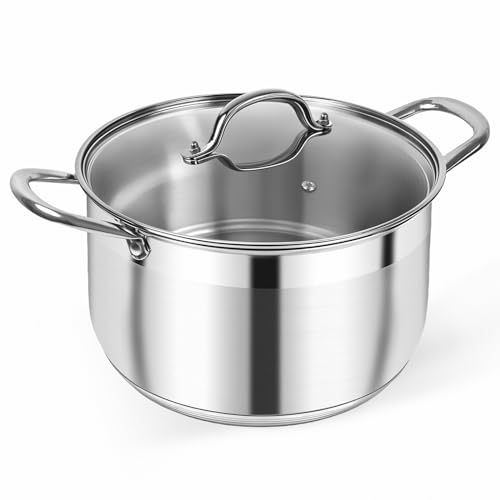
Stainless steel and 5 layers bottom: Kirecoo 8-Quart Stainless Steel Stockpot with Lid is an essential kitchen cookware, boasting an advanced stainless steel construction with a 5-layer thickened base. This cooking pot features high temperature and corrosion resistance, promising a long service life without easy deformation. Composed of aluminum, iron, aluminum, and a magnetic base, the 5-layer bottom of stockpot has good sturdiness and performance. It heats quickly and distributes heat evenly.

Large capacity: holds up to 8 quarts--great for large batches of soups, stews, and more

LARGE CAPACITY: The stock pot has a substantial 16-quart size, providing ample space for cooking large quantities of food, making it ideal for family gatherings and meal prepping
Herb-Crusted Leg of Lamb With Garlic and Rosemary

Herb-crusted leg of lamb stands as an elegant and sophisticated alternative to traditional Easter ham, offering a show-stopping centerpiece that appeals to those seeking a more refined dining experience. The combination of fresh rosemary, garlic, and complementary herbs creates an aromatic crust that permeates the tender meat, while the high-heat roasting method produces a beautifully browned exterior that gives way to perfectly pink, juicy lamb inside. This classic preparation showcases the natural richness of lamb while enhancing it with Mediterranean flavors that feel both festive and timeless.
The success of this dish hinges on proper preparation and temperature control, beginning with bringing the lamb to room temperature before roasting and finishing with an adequate resting period to preserve its succulent texture. A bone-in leg of lamb not only presents dramatically at the table but also contributes depth of flavor and helps regulate cooking for more consistent results. The herb crust forms a protective, flavorful barrier that seals in moisture while creating textural contrast, making each slice a perfect balance of crispy, aromatic exterior and tender, flavorful meat. For optimal results when roasting lamb, consider using premium Dutch oven cookware that distributes heat evenly and retains moisture throughout the cooking process.
Ingredients
- 1 (5–7 pound) bone-in leg of lamb, trimmed of thick fat
- 6 cloves garlic, minced
- 3 tablespoons fresh rosemary, finely chopped
- 2 tablespoons fresh thyme leaves
- ¼ cup extra virgin olive oil
- 2 tablespoons Dijon mustard
- 1 tablespoon kosher salt
- 2 teaspoons freshly ground black pepper
- 1 cup Panko breadcrumbs (optional, for a thicker crust)
Instructions
Remove the lamb from the refrigerator 1 hour before roasting to bring it to room temperature. Preheat your oven to 450°F. In a small bowl, combine the minced garlic, rosemary, thyme, olive oil, salt, and pepper to form a thick herb paste. If you prefer a crunchier crust, mix in the breadcrumbs; otherwise, the herb paste alone works beautifully.
Pat the lamb completely dry with paper towels. Rub the Dijon mustard lightly all over the meat—this acts as a glue—then press the herb paste firmly onto the surface, covering it as evenly as possible. Place the lamb fat-side up on a rack in your roasting pan.
Roast at 450°F for 15–20 minutes to set the crust. Then, reduce the oven temperature to 325°F. Continue roasting until an instant-read thermometer inserted into the thickest part (not touching bone) reads 130°F for medium-rare or 135°F for medium. This usually takes 12–15 minutes per pound. Transfer to a cutting board and rest for at least 20 minutes before carving.
Tips
- The “carry-over cooking” is significant with bone-in lamb; the temperature will rise 5–10 degrees while resting, so pull it out of the oven earlier than you think.
- Using a premium Dutch oven cookware base or a heavy roasting pan helps radiate heat evenly around the joint.
- Save the pan drippings! Even a small amount can be whisked with a little red wine and butter for a quick au jus.
Slow-Roasted Prime Rib With Horseradish Cream

Slow-roasted prime rib represents the pinnacle of holiday roasts, delivering an unmatched combination of luxurious marbling, exceptional tenderness, and rich beefy flavor that makes it worthy of Easter’s most important celebrations.
This method of cooking at a low, steady temperature guarantees edge-to-edge rosy perfection with a deeply caramelized exterior crust, while the accompanying horseradish cream provides a sharp, tangy counterpoint that cuts through the meat’s richness.
The beauty of prime rib lies not only in its impressive presentation when brought to the table but also in its relative simplicity—quality beef needs little embellishment beyond proper seasoning and careful temperature monitoring.
The horseradish cream sauce serves as the traditional and essential accompaniment, its pungent bite and creamy texture creating the perfect balance against the succulent, fatty richness of the beef.
This pairing has endured through generations because it simply works, with the acidic components in both the horseradish and cream helping to cleanse the palate between bites.
A standing rib roast commands attention and respect at any gathering, making it an ideal choice for Easter dinner when you want to create a memorable meal that feels both special and satisfying.
When preparing the horseradish cream, a professional stand mixer can help you achieve a perfectly smooth and well-incorporated sauce with consistent texture throughout.
Ingredients
- 1 (6–8 pound) standing rib roast (bone-in prime rib), 3–4 bones
- 3 tablespoons kosher salt
- 2 tablespoons freshly cracked black pepper
- 1 tablespoon fresh thyme leaves
- For the Horseradish Cream:
- 1 cup crème fraîche or sour cream
- ½ cup prepared horseradish (drained)
- 1 tablespoon Dijon mustard
- 1 tablespoon fresh chives, minced
- 1 teaspoon lemon juice
- Salt and white pepper to taste
Instructions
Generously season the roast with salt, pepper, and thyme at least 24 hours in advance if possible, keeping it uncovered in the fridge to dry-brine the surface. On the day of cooking, let the roast sit at room temperature for 2 hours. Preheat your oven to 250°F (low and slow is the secret here).
Place the roast, bone-side down, on a rack in a roasting pan. Roast until the internal temperature reaches 118°F–120°F for rare to medium-rare. This can take 3–4 hours depending on the size. Remove the roast and tent it with foil for at least 30 minutes.
While the beef rests, crank your oven to 500°F (or the highest setting). While waiting, whisk together the crème fraîche, horseradish, Dijon, chives, and lemon juice in your professional stand mixer or a bowl until soft peaks form and flavors meld. Once the oven is blazing hot, put the roast back in for 6–10 minutes to sear the exterior to a deep mahogany brown. Slice immediately.
Maple-Dijon Glazed Ham With Pineapple

A maple-Dijon glazed ham brings both elegance and ease to your Easter table, offering a perfect balance of sweet and savory flavors that appeal to guests of all ages. The natural smokiness of a quality ham pairs beautifully with the complex sweetness of pure maple syrup and the sharp, tangy bite of Dijon mustard, creating a glaze that caramelizes into a stunning golden-brown lacquer during roasting.
The addition of pineapple—whether rings arranged decoratively across the surface or chunks nestled around the ham—introduces bright acidity and tropical sweetness that cuts through the richness of the meat while adding visual appeal to your presentation.
Ham represents one of the most forgiving and convenient centerpiece options for holiday entertaining, as most hams come fully cooked and require only reheating and glazing to transform them into something spectacular. This allows you to focus your attention on side dishes and other preparations while the ham gently warms in the oven, periodically basted with the intensifying glaze.
The leftovers prove equally valuable, providing delicious meat for sandwiches, breakfast dishes, and casseroles throughout the following week. Unlike more temperamental roasts, ham is nearly impossible to ruin and consistently delivers moist, flavorful results that make it an ideal choice for cooks of any skill level. For an even more impressive presentation and enhanced flavor development, consider roasting your ham in a dutch oven cast iron, which provides superior heat distribution and creates a beautiful caramelized exterior.
Ingredients
- 1 (8–10 pound) fully cooked ham (spiral or whole)
- 1 (20 oz) can pineapple slices in juice (reserve the juice)
- ¾ cup pure maple syrup
- ½ cup dark brown sugar
- 2 tablespoons whole grain Dijon mustard
- 1 teaspoon apple cider vinegar
- whole cloves (optional for studding)
- Maraschino cherries (optional)
Instructions
Preheat oven to 325°F. Place the ham in a roasting pan. If using a whole ham, score the fat in a diamond pattern. Secure pineapple rings (and cherries, if using) all over the surface of the ham using toothpicks. Pour ¼ cup of the reserved pineapple juice into the bottom of the pan. Cover with foil and bake for 12–15 minutes per pound.
In a small saucepan, combine the maple syrup, brown sugar, Dijon mustard, vinegar, and ¼ cup of the reserved pineapple juice. Simmer for 5 minutes until slightly reduced and syrupy.
Remove the foil during the last 45 minutes of cooking. Brush the ham and fruit liberally with the maple-Dijon glaze. Baste every 15 minutes with the pan juices and remaining glaze until the fruit is caramelized and the ham is golden brown.
Tips
- Real maple syrup (not pancake syrup) is essential here for that depth of flavor that pairs with the savory mustard.
- Using a dutch oven cast iron allows for excellent heat retention, which helps caramelize the sugars on the bottom of the ham for a delicious “candy” coating.
- Be careful with the toothpicks when serving; count how many you put in so you can ensure you take them all out!
Shop This Look

One 9 oz package of Hillshire Farm Ultra Thin Sliced Deli Meat, Black Forest Ham

Applegate, Natural Uncured Black Forest Ham Family Size, 10.5oz

This item is only available for delivery or pick-up between 9am and 10pm
Garlic Butter Roasted Whole Chicken

A garlic butter roasted whole chicken delivers timeless comfort and impressive presentation to your Easter celebration, offering a golden-skinned centerpiece that rivals any traditional holiday roast. The combination of softened butter infused with fresh garlic, herbs, and lemon creates a luxurious coating that bastes the chicken as it roasts, resulting in crackling, flavorful skin and exceptionally moist meat beneath.
Unlike ham or lamb, chicken provides a neutral canvas that pairs beautifully with both classic and creative side dishes, while its familiar flavor profile guarantees even the pickiest eaters will find something to enjoy at your Easter table.
Roasting a whole chicken requires minimal hands-on effort but produces maximum reward, making it an excellent choice for home cooks who want to achieve restaurant-quality results without spending hours in the kitchen. The high-heat roasting method creates that coveted crispy skin while keeping the breast meat tender and juicy, and the rendered drippings in the pan become the foundation for a rich, flavorful gravy.
A whole roasted chicken also offers excellent value, feeding a family of four to six generously while providing leftover meat perfect for salads, sandwiches, and soups in the days following your holiday meal. For even better heat retention and distribution, consider roasting your chicken in a premium cast iron dutch oven that maintains consistent temperature throughout the cooking process.
Ingredients
- 1 (4–5 pound) whole chicken
- ½ cup (1 stick) unsalted butter, softened
- 4 cloves garlic, minced
- 1 lemon, halved
- 1 tablespoon fresh thyme leaves
- 1 tablespoon fresh rosemary, chopped
- Salt and freshly ground black pepper
- 1 head of garlic, cut in half horizontally (for the pan)
Instructions
Preheat oven to 425°F. Remove the giblets and pat the chicken extremely dry with paper towels (moisture is the enemy of crispy skin). Season the cavity generously with salt and pepper, then stuff it with the lemon halves and a few sprigs of herbs.
In a small bowl, mash the softened butter with the minced garlic, chopped thyme, rosemary, 1 teaspoon of salt, and ½ teaspoon of pepper. Gently loosen the skin from the breast meat using your fingers and push half of the butter mixture underneath the skin, spreading it out. Rub the remaining butter all over the outside of the bird.
Place the chicken in a cast iron skillet or roasting pan. Roast for 1 hour to 1 hour and 15 minutes, or until the juices run clear and the internal temperature reaches 165°F in the thigh. Baste with the pan drippings halfway through cooking. Let rest for 10 minutes before carving.
Tips
- Tying the legs together with kitchen twine (trussing) helps the chicken cook more evenly and keeps the breast meat moist.
- Roasting in a premium cast iron dutch oven gives you the option to start the chicken on the stovetop to sear the bottom before moving it to the oven.
- Leftover carcass makes the most amazing bone broth—don’t throw it away!
Pan-Seared Lamb Chops With Mint Chimichurri

Pan-seared lamb chops with mint chimichurri represent the pinnacle of elegant yet effortless Easter entertaining, delivering restaurant-quality sophistication with a cooking time of under fifteen minutes.
The rich, slightly gamey flavor of lamb pairs beautifully with the bright, herbaceous notes of fresh mint chimichurri, creating a flavor combination that feels both traditional and rejuvenatingly modern for your spring celebration.
Lamb chops cook quickly and evenly in a screaming-hot skillet, developing a deeply caramelized crust while maintaining a perfectly pink, tender center that practically melts on the tongue.
This dish offers individual portions that look stunning plated, eliminating the carving ceremony required with larger roasts while still maintaining the premium feel appropriate for a holiday meal.
The mint chimichurri sauce elevates these lamb chops from simple to spectacular, providing a vibrant green accompaniment that cuts through the richness of the meat with fresh herbs, tangy vinegar, and a subtle kick of heat.
Unlike heavy, cream-based sauces, chimichurri feels light and seasonal, perfectly suited to a springtime celebration and complex enough to impress even the most discerning guests.
The sauce can be prepared several hours ahead, allowing the flavors to meld while freeing you to focus on other elements of your Easter menu, and any leftovers serve as an excellent condiment for vegetables, grilled bread, or next-day sandwiches.
For the best searing results, cook these lamb chops in a premium Dutch oven or cast-iron skillet that retains heat evenly throughout the cooking process.
Ingredients
- 8 lamb rib chops (about 1 inch thick)
- 2 tablespoons olive oil
- Salt and freshly cracked black pepper
- For the Mint Chimichurri:
- 1 cup fresh mint leaves, packed
- 1 cup fresh flat-leaf parsley, packed
- 3 cloves garlic, peeled
- ½ cup extra virgin olive oil
- 3 tablespoons red wine vinegar
- ½ teaspoon red pepper flakes
- Salt to taste
Instructions
Make the chimichurri first by combining the mint, parsley, garlic, vinegar, and red pepper flakes in a food processor. Pulse until coarsely chopped. Stream in the olive oil while pulsing until you have a loose, vibrant green sauce. Season with salt to taste and set aside to let flavors meld.
Remove lamb chops from the fridge 20 minutes before cooking. Season heavily with salt and pepper on both sides. Heat a large heavy-bottomed skillet (cast iron is best) over high heat until smoking hot. Add the 2 tablespoons of oil.
Sear the chops for 3–4 minutes on the first side without moving them to develop a dark crust. Flip and cook for another 2–3 minutes for medium-rare (125°F–130°F). Don’t crowd the pan; cook in batches if necessary. Rest the chops for 5 minutes, then spoon the fresh chimichurri over the top to serve.
Tips
- For a better crust, sear the fat strip on the edge of the chop first by holding them upright with tongs for a minute.
- A premium Dutch oven or heavy skillet is crucial for maintaining the high heat needed for a proper sear without steaming the meat.
- The chimichurri is best made fresh but can be stored in the fridge for 24 hours; the bright green color will fade slightly but the flavor will still be amazing.
Brown Sugar Baked Ham With Cherry Glaze

Brown sugar baked ham with cherry glaze stands as the ultimate Easter centerpiece, combining nostalgic comfort with show-stopping presentation in a dish that feeds a crowd without demanding constant attention.
The natural saltiness of quality ham transforms beautifully under a sweet, caramelized brown sugar crust, while the tart cherry glaze adds a sophisticated fruity dimension that balances the richness and provides an elegant contrast of flavors.
This preparation method creates a gorgeous mahogany exterior with a sticky, lacquered finish that glistens under dining room lights, making it as visually impressive as it’s delicious.
A spiral-sliced ham eliminates carving stress while maintaining moisture throughout the reheating process, allowing you to serve your guests with minimal effort and maximum impact.
The cherry glaze elevates this Easter ham beyond the ordinary, incorporating both preserved cherry jam and fresh or frozen cherries for layers of concentrated fruit flavor that complement the savory meat without overwhelming it.
This sweet-tart topping cuts through the ham’s saltiness while adding seasonal brightness that feels perfectly suited to spring celebrations, and the glossy finish creates an Instagram-worthy presentation that will have guests reaching for their cameras before their forks.
The beauty of this dish lies in its forgiving nature—the ham is already fully cooked, so you’re simply warming it through and building flavor, making it virtually impossible to ruin and freeing you to focus on side dishes, table settings, and enjoying time with family.
For those looking to prepare multiple dishes simultaneously, a cast iron dutch oven works beautifully for keeping side dishes warm while the ham takes center stage in your roasting pan.
Ingredients
- 1 (8–10 pound) spiral-sliced ham
- 1 cup cherry preserves or jam
- ½ cup light brown sugar
- 2 tablespoons balsamic vinegar
- 1 tablespoon Dijon mustard
- ¼ teaspoon ground cloves
- ¼ teaspoon ground allspice
- ¼ cup water
Instructions
Preheat oven to 325°F. Place the ham cut-side down in a roasting pan with the water. Cover tightly with foil and heat for 12–15 minutes per pound, until warmed through.
While the ham heats, combine the cherry preserves, brown sugar, balsamic vinegar, mustard, cloves, and allspice in a saucepan over medium heat. Simmer for 5 minutes until the jam melts down and the glaze thickens slightly. The chunks of cherry in the preserves add a beautiful texture.
Remove the foil for the last 30 minutes of baking. Brush half the glaze over the ham. Bake for 15 minutes, then brush with the remaining glaze and bake for the final 15 minutes. The glaze should be bubbly and the fruit pieces should be clinging to the ham.
Tips
- If your cherry preserves are very chunky, you can pulse them briefly in a blender if you prefer a smoother look, but the fruit pieces look gorgeous on a holiday table.
- The balsamic vinegar is the secret weapon here; its acidity cuts through the sweetness of the jam and the saltiness of the pork perfectly.
- Keep your side dishes warm in a cast iron dutch oven while the ham rests—it holds heat incredibly well.
Shop This Look

One 9 ounce tray of Sliced Black Forest Uncured Ham

One 9 oz package of Hillshire Farm Ultra Thin Sliced Deli Meat, Honey Ham

One 9 ounce tray of Sliced Honey Smoked Uncured Ham
Lemon-Herb Roasted Turkey Breast

For those seeking a lighter alternative to traditional ham or wanting to accommodate both red meat and poultry preferences at the Easter table, lemon-herb roasted turkey breast delivers exceptional flavor without the commitment of roasting an entire bird.
This streamlined approach focuses all the attention on the most coveted part of the turkey—the breast—while infusing it with bright citrus notes and aromatic herbs that capture the essence of spring.
The bone-in turkey breast roasts to golden perfection with crispy, herb-scented skin and juicy, tender meat beneath, providing an elegant main course that feels special enough for the holiday yet straightforward enough to execute flawlessly even if you’re not an experienced cook.
The lemon-herb preparation transforms simple turkey into something extraordinary, with fresh rosemary, thyme, and sage mingling with garlic and lemon zest to create an aromatic crust that permeates the meat as it roasts.
Compound butter slipped beneath the skin bastes the turkey from within, ensuring every slice remains moist and flavorful while the exterior develops that coveted golden-brown finish that signals a perfectly roasted bird.
This dish offers the best of both worlds—the festive appeal of turkey without the intimidation factor of managing a whole bird, and it cooks in roughly half the time, freeing up valuable oven space for side dishes and making your Easter dinner preparation far more manageable.
For even more versatility in your holiday cooking, consider using a premium dutch oven set to prepare complementary side dishes or even braise vegetables while the turkey roasts.
Ingredients
- 1 (5–7 pound) bone-in turkey breast
- 6 tablespoons unsalted butter, softened
- 1 tablespoon olive oil
- 1 tablespoon fresh sage, chopped
- 1 tablespoon fresh rosemary, chopped
- 1 tablespoon fresh thyme leaves
- 3 cloves garlic, minced
- Zest of 2 lemons
- 2 tablespoons lemon juice
- 1½ teaspoons kosher salt
- 1 teaspoon black pepper
Instructions
Preheat oven to 325°F. In a small bowl, mix the softened butter, olive oil, sage, rosemary, thyme, garlic, lemon zest, lemon juice, salt, and pepper until you have a smooth paste.
Pat the turkey breast dry. Carefully run your hand under the skin of the breast to separate it from the meat without tearing it. Rub about ⅔ of the herb butter underneath the skin, massaging it directly into the meat. Rub the remaining butter over the top of the skin.
Place the turkey on a rack in a roasting pan. Roast for 1½ to 2 hours, basting with the pan juices every 30 minutes. The turkey is done when a thermometer inserted into the thickest part reads 160°F. Remove from the oven, tent with foil, and let rest for 20 minutes (the temp will rise to 165°F) before slicing.
Tips
- Cooking just the breast prevents the common problem of drying out white meat while waiting for dark meat to cook.
- If the skin starts browning too quickly before the meat is done, just lay a loose piece of foil over the top.
- Using a premium dutch oven set or heavy roaster ensures steady radiant heat, which helps the skin crisp up evenly.
Beef Tenderloin With Red Wine Reduction

For Easter celebrations where you want to elevate your dinner to restaurant-quality elegance, beef tenderloin with red wine reduction stands as the ultimate show-stopping centerpiece. This premium cut, prized for its exceptional tenderness and buttery texture, transforms into a luxurious main course that signals special occasion dining at its finest. The tenderloin’s naturally mild flavor profile makes it the perfect canvas for the rich, velvety red wine reduction that accompanies it—a sophisticated sauce that brings depth, complexity, and a gorgeous glossy finish to each perfectly seared slice.
Unlike other cuts that require extensive preparation or slow cooking methods, tenderloin delivers impressive results with relatively simple techniques, making it an ideal choice for hosts who want maximum impact without spending all day in the kitchen.
The key to perfect beef tenderloin lies in the combination of high-heat roasting and precise temperature monitoring, which guarantees a beautifully caramelized exterior crust while maintaining that coveted rosy-pink center throughout most of the roast. The red wine reduction, made from a combination of full-bodied wine, shallots, beef stock, and fresh herbs, reduces down to a concentrated essence that complements the beef’s richness without overwhelming its natural flavor.
This dish embodies celebratory dining—it’s impressive enough to wow your guests, refined enough to anchor an upscale Easter menu alongside elegant sides, yet surprisingly forgiving for home cooks willing to invest in quality meat and a reliable meat thermometer. When it comes to slicing your perfectly cooked roast, using a premium beef tenderloin knife ensures clean, precise cuts that showcase the tender texture and preserve the beautiful presentation of each medallion.
Ingredients
- 1 whole beef tenderloin (4-5 pounds), trimmed
- 3 tablespoons olive oil
- 2 tablespoons unsalted butter
- 4 garlic cloves, minced
- 2 tablespoons fresh rosemary, chopped
- 2 tablespoons fresh thyme leaves
- 2 teaspoons kosher salt
- 1½ teaspoons black pepper
- 2 cups dry red wine (Cabernet Sauvignon or Merlot)
- 3 shallots, finely minced
- 2 cups beef stock
- 2 tablespoons balsamic vinegar
- 3 tablespoons cold butter, cut into pieces
- 1 tablespoon Dijon mustard
- 1 bay leaf
- Fresh thyme sprigs for garnish
Instructions
Remove the beef tenderloin from the refrigerator 1 hour before cooking to bring it to room temperature, then pat it completely dry and tie it with kitchen twine at 2-inch intervals to assure even cooking. Preheat your oven to 450°F while you combine olive oil, minced garlic, rosemary, thyme, salt, and pepper in a small bowl, then rub this mixture generously over the entire surface of the tenderloin.
Heat 2 tablespoons of butter in a large oven-safe skillet over high heat until sizzling, sear the tenderloin on all sides until deeply browned (about 2-3 minutes per side), then transfer the skillet to the preheated oven and roast for 20-25 minutes until an instant-read thermometer inserted into the thickest part reads 125°F for medium-rare.
While the beef roasts, prepare the red wine reduction by sautéing minced shallots in the same skillet you used for searing (after transferring the beef to the oven), add the red wine and bay leaf, scraping up any browned bits, and simmer until reduced by half, then add beef stock and balsamic vinegar and continue reducing until the sauce coats the back of a spoon.
Once the tenderloin reaches temperature, remove it from the oven, transfer to a cutting board, tent loosely with foil, and let rest for 15 minutes, then finish the sauce by removing the bay leaf, whisking in the cold butter pieces and Dijon mustard until glossy and smooth, seasoning with salt and pepper to taste.
Slice the tenderloin into ½-inch thick medallions, arrange on a serving platter, drizzle with the red wine reduction, and garnish with fresh thyme sprigs.
Tips
Investing in a quality instant-read thermometer is absolutely essential for beef tenderloin since even a few degrees can mean the difference between perfect medium-rare and overcooked meat—remember that the internal temperature will continue to rise about 5 degrees during the resting period, so remove the roast from the oven when it’s slightly under your target temperature.
If your tenderloin has a thin tail end, fold it under and secure with twine to create a more uniform thickness that cooks evenly, or ask your butcher for a center-cut portion that maintains consistent diameter throughout.
The red wine reduction can be made up to two days in advance and gently reheated before serving, which greatly reduces day-of stress, and if the sauce becomes too thick upon reheating, simply whisk in a tablespoon or two of beef stock to restore the proper consistency.
For an extra layer of flavor, add a sprig of fresh rosemary to the red wine reduction while it simmers, removing it before whisking in the final butter, and always use a wine you’d actually enjoy drinking since its flavor will concentrate markedly during the reduction process.
Honey Mustard Glazed Pork Loin

Honey mustard glazed pork loin offers a perfect balance of savory and sweet that makes it an outstanding choice for Easter dinner, especially when serving guests who prefer pork over beef or lamb. This centerpiece combines tender, juicy pork with a glossy, caramelized glaze that delivers a delightful contrast of flavors—the tangy bite of Dijon mustard paired with the natural sweetness of honey, enhanced with subtle notes of garlic and fresh herbs.
The pork loin itself is an excellent cut for special occasions: it’s lean yet remains moist when cooked properly, feeds a crowd generously, and presents beautifully when sliced to reveal its golden exterior and tender interior.
What makes this dish particularly appealing for Easter entertaining is its versatility and approachability. Unlike more intimidating cuts of meat, pork loin is forgiving, affordable, and cooks relatively quickly, yet still delivers that impressive, celebration-worthy presentation your holiday table deserves.
The honey mustard glaze caramelizes during roasting to create a beautiful mahogany crust that catches the light and draws admiring glances, while keeping the meat beneath incredibly moist and flavorful. This recipe works wonderfully alongside traditional Easter sides like scalloped potatoes, roasted vegetables, or fresh spring salads, and the leftovers—if you’re lucky enough to have any—make exceptional sandwiches for post-holiday meals. For achieving the best sear and even heat distribution when browning the pork loin before roasting, a premium cast iron skillet delivers superior results that enhance the final caramelization of the glaze.
Shop This Look

Made with French’s #1 grade mustard seed, molasses, aged cayenne and hickory smoke

USDA organic honey mustard dressing made with premium ingredients

Honey Mustard Dipping Sauce is made with real honey & premium mustard seeds
Ingredients
- 1 boneless pork loin roast (3-4 pounds)
- ½ cup Dijon mustard
- ⅓ cup honey
- 3 tablespoons olive oil
- 4 garlic cloves, minced
- 2 tablespoons apple cider vinegar
- 1 tablespoon fresh thyme leaves
- 1 tablespoon fresh rosemary, chopped
- 1½ teaspoons kosher salt
- 1 teaspoon black pepper
- ½ teaspoon smoked paprika
- ¼ teaspoon cayenne pepper (optional)
- 2 tablespoons brown sugar
- 2 tablespoons unsalted butter, melted
Instructions
Remove the pork loin from the refrigerator 30 minutes before cooking and pat it completely dry with paper towels, then season generously with salt, pepper, and smoked paprika on all sides.
Preheat your oven to 375°F and prepare the glaze by whisking together the Dijon mustard, honey, olive oil, minced garlic, apple cider vinegar, thyme, rosemary, brown sugar, melted butter, and cayenne pepper if using, until smooth and well combined.
Place the pork loin in a roasting pan fitted with a rack and brush half of the honey mustard glaze evenly over the entire surface of the meat, reserving the remaining glaze for later.
Roast the pork for 25 minutes, then brush with half of the reserved glaze and continue roasting for another 20-25 minutes, applying the final layer of glaze during the last 10 minutes of cooking.
The pork is done when an instant-read thermometer inserted into the thickest part registers 145°F, at which point you should remove it from the oven and tent it loosely with aluminum foil to rest for 10-15 minutes before slicing into half-inch thick medallions and arranging them on a serving platter, drizzling any accumulated pan juices over the top.
Tips
The key to preventing dry pork loin isn’t overcooking it—145°F is the USDA-recommended safe temperature, and the meat will continue to rise a few degrees during resting, so resist the urge to cook it longer.
If your pork loin has a fat cap on one side, position it fat-side up during roasting to allow the fat to baste the meat naturally as it cooks.
Make the glaze up to two days in advance and store it covered in the refrigerator, bringing it to room temperature before use for easier brushing.
For extra insurance against dryness, you can brine the pork loin in a simple solution of water, salt, and sugar for 2-4 hours before cooking, though this step is optional.
If the glaze begins to darken too quickly during roasting, tent the pork loosely with foil while it finishes cooking to prevent burning while still allowing the interior to reach the proper temperature.
Creamy Scalloped Potatoes With Gruyère

Creamy scalloped potatoes with Gruyère represent the pinnacle of elegant comfort food, making them an ideal accompaniment to your Easter feast. This luxurious side dish features paper-thin slices of tender potatoes layered with rich, velvety cream sauce and nutty Gruyère cheese, all baked until golden and bubbling.
The Gruyère adds a sophisticated depth of flavor that elevates these scalloped potatoes beyond the ordinary—its slightly sweet, earthy notes melt beautifully into the cream, creating a sauce that’s both indulgent and refined. Each layer of potato absorbs the luscious cream mixture, transforming into tender, melt-in-your-mouth perfection while the top develops a gorgeous golden-brown crust that provides a delightful textural contrast.
What makes this dish particularly suited for Easter dinner is its make-ahead friendliness and impressive presentation. You can assemble the entire dish hours before your guests arrive, then simply slide it into the oven while your main course rests, guaranteeing everything comes together seamlessly.
The creamy, cheesy layers look stunning when served family-style in a beautiful baking dish, and the aroma that fills your kitchen as it bakes is nothing short of heavenly. These scalloped potatoes pair exceptionally well with ham, pork loin, lamb, or beef, soaking up flavorful juices and providing a rich, satisfying complement to lighter spring vegetables on your holiday table.
Ingredients
- 3 pounds russet or Yukon gold potatoes, peeled
- 2½ cups heavy cream
- 1 cup whole milk
- 4 garlic cloves, minced
- 3 cups Gruyère cheese, freshly grated, divided
- 4 tablespoons unsalted butter, plus more for greasing
- 3 tablespoons all-purpose flour
- 1½ teaspoons kosher salt
- ¾ teaspoon black pepper
- ½ teaspoon ground nutmeg
- ¼ teaspoon dried thyme
- 2 tablespoons fresh chives, chopped (optional)
- ½ cup Parmesan cheese, grated
Instructions
Preheat your oven to 350°F and generously butter a 9×13-inch baking dish, then use a mandoline or sharp knife to slice the potatoes into ⅛-inch thick rounds, placing them in cold water to prevent browning.
In a large saucepan over medium heat, melt the butter and sauté the minced garlic for about one minute until fragrant, then whisk in the flour and cook for two minutes to create a roux. Gradually pour in the heavy cream and milk while whisking constantly to prevent lumps, then add the salt, pepper, nutmeg, and thyme, bringing the mixture to a gentle simmer until it thickens slightly, about 5 minutes. Remove from heat and stir in 2 cups of the Gruyère cheese until melted and smooth.
Drain and thoroughly dry the potato slices, then arrange a third of them in an overlapping layer in the prepared baking dish, pour a third of the cream sauce over top, and repeat this layering process two more times, finishing with the cream sauce. Combine the remaining cup of Gruyère with the Parmesan cheese and sprinkle evenly over the top, then cover the dish tightly with aluminum foil and bake for 45 minutes.
Remove the foil and continue baking for an additional 30-40 minutes until the potatoes are fork-tender, the sauce is bubbling around the edges, and the top is golden brown. Let the dish rest for 15 minutes before serving to allow the sauce to thicken and the layers to set, then garnish with fresh chives if desired.
Tips
For the best results, use a mandoline to ensure uniformly thin potato slices that will cook evenly throughout the dish. Avoid pre-shredded cheese, as it contains anti-caking agents that prevent smooth melting—freshly grated Gruyère creates a far superior, creamier sauce.
If you find Gruyère too expensive or difficult to source, you can substitute half with sharp white cheddar, though the flavor profile will be slightly different. The resting period after baking is essential; cutting into the potatoes immediately will result in a runny sauce, but allowing them to set creates perfect, neat portions.
This dish can be assembled completely up to 24 hours in advance and refrigerated; just add an extra 10-15 minutes to the covered baking time if cooking straight from the refrigerator. If the top begins to brown too quickly during baking, tent loosely with foil to prevent burning while the potatoes finish cooking through.
Garlic Mashed Potatoes With Cream Cheese

Garlic mashed potatoes with cream cheese bring together two beloved ingredients to create a side dish that’s impossibly creamy, luxuriously smooth, and packed with savory flavor. The combination of fluffy mashed potatoes, tangy cream cheese, and aromatic roasted garlic transforms this classic comfort food into something extraordinary that deserves a place at your Easter table.
The cream cheese adds a subtle tang and incredible richness that complements the earthiness of the potatoes, while the roasted garlic infuses every bite with a mellow, sweet, and slightly nutty flavor that’s far more sophisticated than raw garlic would provide. This dish strikes the perfect balance between indulgent and approachable, offering a familiar favorite with an elegant twist.
These garlic mashed potatoes are wonderfully versatile and pair beautifully with virtually any Easter main course, from honey-glazed ham to herb-crusted lamb to roasted chicken. The velvety texture makes them perfect for soaking up gravies and pan sauces, while their rich flavor profile stands up well alongside bold seasonings and glazes.
Best of all, this recipe can be partially prepared ahead of time—you can roast the garlic and even boil the potatoes earlier in the day, then finish the dish just before serving to make certain it arrives at the table piping hot and irresistibly creamy.
Ingredients
- 3 pounds Yukon gold potatoes, peeled and cut into 2-inch chunks
- 1 head of garlic
- 8 ounces cream cheese, softened to room temperature
- ½ cup unsalted butter, softened
- ¾ cup whole milk, warmed
- ½ cup sour cream
- 1½ teaspoons kosher salt
- ¾ teaspoon black pepper
- ¼ teaspoon garlic powder
- 3 tablespoons fresh chives, chopped
- 2 tablespoons fresh parsley, chopped
- 1 tablespoon olive oil
Instructions
Preheat your oven to 400°F, then cut the top off the head of garlic to expose the cloves, drizzle with olive oil, wrap in foil, and roast for 40-45 minutes until soft and caramelized.
While the garlic roasts, place the potato chunks in a large pot, cover with cold salted water, and bring to a boil over high heat, then reduce to medium-high and cook for 15-20 minutes until the potatoes are fork-tender.
Drain the potatoes thoroughly and return them to the hot pot for one minute to evaporate excess moisture, then squeeze the roasted garlic cloves from their skins into the pot.
Add the softened cream cheese and butter to the hot potatoes and mash with a potato masher until mostly smooth, then gradually stir in the warmed milk and sour cream until you reach your desired consistency.
Season with salt, pepper, and garlic powder, then fold in the fresh chives and parsley, adjusting seasonings to taste before transferring to a serving bowl.
Tips
For the smoothest, creamiest texture, make certain all your dairy ingredients are at room temperature or warmed before adding them to the hot potatoes, as cold ingredients can make the potatoes gummy and dense.
Avoid over-mixing or using an electric mixer, which can break down the potato starches and create a gluey, paste-like consistency—a handheld masher or ricer produces the best results.
If you need to make these ahead, prepare the recipe completely, transfer to a buttered baking dish, dot the top with additional butter, cover tightly with foil, and refrigerate for up to 24 hours, then reheat in a 350°F oven for 30-35 minutes until heated through.
You can also keep the finished mashed potatoes warm in a slow cooker set to low for up to two hours, stirring occasionally and adding a splash of milk if they begin to dry out.
Cheesy Au Gratin Potatoes With Bacon

Cheesy au gratin potatoes with bacon elevate the traditional scalloped potato dish into a decadent showstopper worthy of your Easter celebration. This recipe layers thinly sliced potatoes with a velvety cheese sauce, crispy bacon pieces, and a golden, bubbling top that creates an irresistible combination of textures and flavors. The creamy interior contrasts beautifully with the crispy, cheese-crusted edges, while the smoky bacon adds a savory depth that transforms these potatoes from a simple side dish into something truly memorable. Each forkful delivers the perfect balance of tender potatoes, rich cheese sauce, and salty bacon that will have your guests coming back for seconds.
This dish is the definition of comfort food elegance, making it an ideal accompaniment to Easter ham, roasted lamb, or prime rib. The combination of Gruyère and sharp cheddar creates a complex, nutty flavor profile that’s more sophisticated than standard cheddar alone, while the bacon provides a pleasant contrast to lighter spring vegetables on your holiday table. While au gratin potatoes do require some time in the oven, they’re largely hands-off once assembled, and they can be prepared several hours ahead and baked just before dinner, making them a practical choice for busy holiday cooking.
Ingredients
- 3 pounds russet potatoes, peeled and sliced ⅛-inch thick
- 8 ounces bacon, chopped
- 3 tablespoons unsalted butter
- 3 cloves garlic, minced
- 3 tablespoons all-purpose flour
- 2½ cups whole milk, warmed
- 1 cup heavy cream
- 1½ cups Gruyère cheese, shredded
- 1 cup sharp cheddar cheese, shredded
- ½ cup Parmesan cheese, grated
- 1½ teaspoons kosher salt
- ¾ teaspoon black pepper
- ½ teaspoon dried thyme
- ¼ teaspoon nutmeg
- ¼ teaspoon cayenne pepper
- 2 tablespoons fresh parsley, chopped
Instructions
Preheat your oven to 375°F and grease a 9×13-inch baking dish, then cook the chopped bacon in a large skillet over medium heat until crispy, remove with a slotted spoon, and set aside on paper towels.
In a large saucepan, melt the butter over medium heat, add the minced garlic and cook for one minute until fragrant, then whisk in the flour and cook for two minutes to create a roux. Gradually pour in the warmed milk and heavy cream while whisking constantly to prevent lumps, then continue cooking and stirring until the sauce thickens enough to coat the back of a spoon, about 5-7 minutes.
Remove from heat and stir in 1 cup of Gruyère, ½ cup of cheddar, and ¼ cup of Parmesan until melted, then season with salt, pepper, thyme, nutmeg, and cayenne.
Layer half of the sliced potatoes in the prepared baking dish, overlapping slightly, then sprinkle with half of the cooked bacon and pour half of the cheese sauce over top, repeat with the remaining potatoes, bacon, and sauce, then top with the remaining Gruyère, cheddar, and Parmesan.
Cover the dish tightly with aluminum foil and bake for 45 minutes, then remove the foil and continue baking for an additional 30-35 minutes until the potatoes are tender when pierced with a knife and the top is golden brown and bubbling. Let the dish rest for 10-15 minutes before serving to allow the sauce to set, then garnish with fresh chopped parsley.
Tips
For the best results, use a mandoline slicer to ensure uniformly thin potato slices that will cook evenly and create those perfect tender layers. If you don’t have a mandoline, take your time with a sharp knife and aim for consistent thickness.
The dish can be assembled up to 24 hours in advance and refrigerated covered—just add an extra 10-15 minutes to the covered baking time if baking straight from the refrigerator. If the top is browning too quickly during baking, tent loosely with foil until the potatoes are fully tender. For extra crispy bacon flavor, reserve a tablespoon of the bacon drippings and brush it over the top of the dish during the final 10 minutes of baking.
Garlic Roasted Red Potatoes With Rosemary

Garlic roasted red potatoes with rosemary offer a rustic, aromatic side dish that brings the flavors of the Mediterranean to your Easter table with minimal effort and maximum impact.
These golden-crusted potatoes feature crispy exteriors that give way to fluffy, tender interiors infused with the fragrant combination of fresh rosemary and roasted garlic.
The simplicity of this dish allows the natural earthy sweetness of the red potatoes to shine while the herbs and garlic provide a sophisticated flavor boost that pairs beautifully with any Easter main course.
Unlike more labor-intensive potato dishes, these require just a few minutes of prep work before the oven does all the heavy lifting, making them an excellent choice when you’re juggling multiple dishes for your holiday feast.
This recipe celebrates the beauty of fresh, quality ingredients prepared simply but perfectly.
The red potatoes hold their shape beautifully during roasting and develop a creamy texture that doesn’t require any added dairy, making this an ideal option for guests with dietary restrictions.
The combination of olive oil, fresh rosemary, and generous amounts of garlic creates an intoxicating aroma that will fill your kitchen and have everyone keenly anticipating dinner.
These potatoes are versatile enough to complement everything from glazed ham to roasted lamb, and they’re just as delicious served hot from the oven as they’re at room temperature, giving you flexibility in your Easter dinner timing.
Ingredients
- 3 pounds small red potatoes, halved or quartered
- ⅓ cup extra virgin olive oil
- 6 cloves garlic, minced
- 2 tablespoons fresh rosemary, finely chopped
- 1½ teaspoons kosher salt
- ¾ teaspoon black pepper
- ½ teaspoon garlic powder
- ½ teaspoon onion powder
- ¼ teaspoon paprika
- 2 tablespoons fresh parsley, chopped
- 1 tablespoon lemon zest (optional)
Instructions
Preheat your oven to 425°F and line a large baking sheet with parchment paper or lightly grease it with cooking spray.
Place the halved red potatoes in a large mixing bowl and add the olive oil, minced garlic, chopped rosemary, salt, pepper, garlic powder, onion powder, and paprika, then toss everything together until the potatoes are evenly coated with the oil and seasonings.
Spread the potatoes in a single layer on the prepared baking sheet, cut side down for maximum browning, making sure they aren’t overcrowded to guarantee proper crisping.
Roast in the preheated oven for 35-45 minutes, flipping the potatoes halfway through the cooking time, until they’re golden brown and crispy on the outside and fork-tender on the inside.
Remove from the oven and immediately transfer to a serving bowl, then toss with fresh parsley and lemon zest if desired, and serve hot.
Tips
For the crispiest results, make sure your potatoes are thoroughly dried after washing and cut into uniform sizes so they cook evenly.
If you prefer an even more intense garlic flavor, you can add whole garlic cloves to the roasting pan alongside the potatoes—they’ll become sweet and caramelized during cooking and can be squeezed out of their skins and spread on the potatoes before serving.
These potatoes can be prepped up to 4 hours in advance by tossing them with the oil and seasonings, then covering and refrigerating until you’re ready to roast, though you may need to add a few extra minutes to the cooking time if starting with cold potatoes.
If you’re cooking multiple dishes and need oven space, these potatoes are forgiving and can be roasted at temperatures ranging from 400°F to 450°F with slight adjustments to cooking time.
Sweet Potato Casserole With Pecan Streusel

Sweet potato casserole with pecan streusel transforms humble sweet potatoes into an elegant, dessert-like side dish that perfectly balances savory and sweet elements on your Easter table. This Southern-inspired classic features a velvety smooth sweet potato base enriched with butter, warm spices, and just enough brown sugar to guarantee the natural sweetness without overwhelming it.
The crowning glory is a buttery pecan streusel topping that bakes into a golden, crunchy contrast against the creamy filling beneath. While some versions rely heavily on marshmallows, this sophisticated interpretation opts for the nutty richness of pecans combined with brown sugar and a hint of cinnamon, creating a casserole that feels special enough for a holiday celebration while remaining approachable and crowd-pleasing.
This dish can be prepared entirely ahead of time, making it an invaluable addition to your Easter menu when oven space and timing become critical considerations. The sweet potato filling can be made up to two days in advance and refrigerated, with the streusel topping added just before baking.
The natural earthiness of sweet potatoes pairs wonderfully with Easter ham, roasted turkey, or prime rib, providing a touch of sweetness that complements savory main courses without competing with them. Whether you consider it a side dish or secretly think of it as dessert, this casserole has become a holiday tradition in countless households for good reason—it delivers impressive flavor and visual appeal with straightforward preparation that even novice cooks can master confidently.
Ingredients
- 4 pounds sweet potatoes
- ½ cup unsalted butter, melted
- ½ cup whole milk
- ⅔ cup light brown sugar, packed
- 2 large eggs, beaten
- 1 teaspoon vanilla extract
- 1 teaspoon ground cinnamon
- ½ teaspoon ground nutmeg
- ½ teaspoon salt
- 1 cup all-purpose flour
- 1 cup light brown sugar, packed
- ½ cup unsalted butter, cold and cubed
- 1½ cups pecans, chopped
- ½ teaspoon cinnamon
- ¼ teaspoon salt
Instructions
Preheat your oven to 400°F and pierce the sweet potatoes several times with a fork, then place them on a baking sheet and roast for 45-60 minutes until completely tender when pierced with a knife. Once cool enough to handle, peel the sweet potatoes and add the flesh to a large mixing bowl, mashing until smooth, then stir in the melted butter, milk, brown sugar, beaten eggs, vanilla extract, cinnamon, nutmeg, and salt until well combined and creamy.
Reduce oven temperature to 350°F and spread the sweet potato mixture evenly into a greased 9×13-inch baking dish. In a separate bowl, combine the flour, brown sugar, cold cubed butter, chopped pecans, cinnamon, and salt, using a pastry cutter or your fingers to work the mixture until it resembles coarse crumbs with pea-sized butter pieces throughout.
Sprinkle the pecan streusel evenly over the sweet potato filling and bake for 35-40 minutes until the topping is golden brown and the edges are bubbling, then remove from the oven and let rest for 10 minutes before serving.
Tips
For the smoothest texture, consider using a hand mixer or food processor to blend the sweet potato filling rather than mashing by hand, which guarantees there are no lumps in the final casserole. If you’re preparing this dish ahead of time, keep the streusel topping separate and refrigerated in an airtight container, only adding it to the chilled sweet potato base right before baking, and note that you may need to add an extra 5-10 minutes to the baking time if the casserole is going into the oven cold.
The streusel topping can brown quickly, so if it’s getting too dark before the casserole is heated through, tent the dish loosely with aluminum foil for the remaining baking time. For a more intense flavor, toast the pecans in a dry skillet for 3-4 minutes before chopping and adding them to the streusel mixture. This casserole can be made in individual ramekins for an elegant presentation, though you’ll need to reduce the baking time to about 20-25 minutes.
Roasted Asparagus With Parmesan and Lemon

Roasted asparagus with Parmesan and lemon brings vibrant color and sophisticated simplicity to your Easter dinner spread, offering a fresh counterpoint to the richer, heavier dishes that typically dominate the holiday table.
This preparation allows the asparagus to shine through high-heat roasting, which caramelizes the natural sugars in the stalks while maintaining their signature snap and verdant flavor. The addition of freshly grated Parmesan cheese adds a nutty, salty dimension that clings to the roasted spears, while bright lemon zest and juice cut through the richness with a citrusy brightness that awakens the palate.
Unlike boiled or steamed asparagus that can turn limp and watery, roasting concentrates the vegetable’s flavor and creates slightly crispy tips that provide textural contrast.
This elegant side dish requires minimal hands-on time and can be timed to finish just as your main course comes out of the oven, making it an ideal choice when coordinating multiple dishes for a large meal.
Asparagus signals the arrival of spring, making it a seasonally appropriate vegetable that feels perfectly suited to Easter celebrations. The presentation is naturally beautiful—the bright green stalks arranged on a platter and garnished with golden cheese and lemon create an eye-catching display that looks far more labor-intensive than it actually is.
Whether you’re serving ham, lamb, or poultry as your centerpiece, this asparagus preparation complements virtually any Easter main course while adding essential freshness and balance to the overall menu.
Ingredients
- 2 pounds fresh asparagus, woody ends trimmed
- 3 tablespoons extra-virgin olive oil
- ¾ teaspoon kosher salt
- ½ teaspoon freshly ground black pepper
- ½ cup freshly grated Parmesan cheese
- 1 lemon, zested and juiced
- 2 cloves garlic, minced
- Red pepper flakes (optional)
Instructions
Preheat your oven to 425°F and line a large baking sheet with parchment paper or lightly grease it.
Arrange the trimmed asparagus in a single layer on the prepared baking sheet, then drizzle with olive oil and sprinkle with minced garlic, salt, and black pepper, tossing to coat evenly.
Roast for 12-15 minutes, depending on the thickness of the spears, until the asparagus is tender with slightly browned tips and the stalks can be easily pierced with a fork but still maintain some firmness.
Remove from the oven and immediately transfer to a serving platter, then sprinkle with freshly grated Parmesan cheese while the asparagus is still hot so the cheese begins to melt slightly.
Finish by zesting the lemon directly over the asparagus, then drizzle with fresh lemon juice to taste, adding a pinch of red pepper flakes if desired for subtle heat.
Tips
For the best results, select asparagus spears that are uniform in thickness so they cook evenly—medium-thickness stalks work best for roasting, as very thin spears can overcook quickly while thick ones may require longer cooking times.
If your asparagus varies in thickness, arrange the thicker spears toward the center of the baking sheet where heat is most intense and thinner ones toward the edges.
Don’t skip the step of adding Parmesan while the asparagus is still hot, as the residual heat creates a slightly melted, clingy coating rather than loose cheese that falls off.
This dish is best served immediately after preparation, but if you need to hold it briefly, keep it uncovered at room temperature rather than covering it, which can cause the asparagus to steam and lose its roasted texture.
Honey-Glazed Carrots With Fresh Thyme

Honey-glazed carrots with fresh thyme deliver natural sweetness and earthy elegance to your Easter table, transforming this humble root vegetable into a glistening, caramelized side dish that appeals to guests of all ages.
The combination of honey’s floral sweetness with butter’s richness creates a glossy glaze that clings to tender carrots, while fresh thyme adds an aromatic, slightly peppery note that prevents the dish from becoming overly sweet.
This preparation method enhances the carrots’ inherent sugars through gentle cooking, resulting in vegetables that are fork-tender yet retain enough structure to hold their shape on the plate.
The golden-amber glaze catches the light beautifully when served, making these carrots as visually appealing as they’re delicious.
This classic side dish pairs exceptionally well with Easter ham, roasted lamb, or herb-crusted beef, as the carrots’ sweetness balances savory, salt-cured, or heavily seasoned meats.
The recipe is forgiving and can be prepared largely in advance, then finished with the glaze just before serving, which helps streamline your holiday cooking timeline.
Fresh thyme not only contributes flavor but also serves as an elegant garnish that reinforces the springtime theme of your Easter celebration.
Whether you use whole baby carrots, carrot coins, or batons cut from larger carrots, this preparation method adapts easily while delivering consistent results that feel both comforting and special.
Ingredients
- 2 pounds carrots, peeled and cut into uniform pieces
- 3 tablespoons unsalted butter
- 3 tablespoons honey
- ¾ teaspoon kosher salt
- ¼ teaspoon freshly ground black pepper
- 2 tablespoons fresh thyme leaves, plus extra sprigs for garnish
- ½ cup chicken or vegetable broth
- 1 tablespoon fresh lemon juice
Instructions
Place the prepared carrots in a large skillet with the butter, honey, salt, pepper, thyme leaves, and broth, arranging them in a single layer if possible.
Bring the mixture to a boil over medium-high heat, then reduce to medium-low and cover the skillet, allowing the carrots to simmer for 10-12 minutes until they’re nearly tender when pierced with a fork.
Remove the lid and increase the heat to medium-high, continuing to cook for another 5-8 minutes while occasionally shaking the pan or gently stirring, allowing the liquid to reduce into a thick, glossy glaze that coats the carrots.
Once the glaze has thickened and the carrots are fully tender with a beautiful sheen, remove from heat and stir in the lemon juice, then transfer to a serving dish and garnish with fresh thyme sprigs.
Tips
For the best texture and even cooking, cut your carrots into uniform sizes—if using large carrots, slice them into rounds or sticks of similar thickness so they cook at the same rate.
The glaze can go from perfectly caramelized to burned quickly once the liquid reduces, so stay attentive during the final glazing stage and reduce the heat slightly if the honey begins to darken too rapidly.
If you prefer a more savory version, reduce the honey to 2 tablespoons and add a teaspoon of Dijon mustard or a splash of balsamic vinegar for depth.
These carrots can be parboiled up to a day ahead and stored in the refrigerator, then finished in the skillet with the honey-butter glaze just before serving to save valuable stovetop space on Easter day.
Glazed Rainbow Carrots With Honey and Herbs

Glazed rainbow carrots with honey and herbs bring a vibrant spectrum of color to your Easter table while delivering layers of flavor through the natural sweetness of multicolored heirloom varieties. Rainbow carrots—which include purple, yellow, white, and traditional orange varieties—each contribute their own subtle flavor nuances, from the peppery notes of purple carrots to the mild sweetness of yellow ones, creating a more complex taste experience than standard orange carrots alone.
When glazed with honey and finished with a blend of fresh herbs, these colorful vegetables become a show-stopping centerpiece side dish that celebrates the diversity and abundance of spring produce. The visual appeal of rainbow carrots can’t be overstated, as their varied hues create an eye-catching presentation that elevates even the simplest Easter spread.
This recipe takes advantage of the carrots’ natural sugars, concentrating them through a glazing process that caramelizes their exterior while keeping the interior tender and sweet. A combination of herbs—typically including parsley, dill, and chives—adds brightness and freshness that balances the honey’s sweetness and prevents the dish from becoming one-dimensional.
The technique is straightforward enough for novice cooks yet impressive enough to satisfy experienced home chefs looking for a reliable, beautiful side dish. Rainbow carrots pair beautifully with any Easter main course, from traditional ham to roasted chicken or spring lamb, and their natural sweetness makes them particularly appealing to children who might otherwise resist eating vegetables.
Ingredients
- 2 pounds rainbow carrots, peeled and trimmed
- 3 tablespoons unsalted butter
- 2½ tablespoons honey
- ¾ cup vegetable or chicken broth
- ½ teaspoon kosher salt
- ¼ teaspoon black pepper
- 1 tablespoon fresh parsley, chopped
- 1 tablespoon fresh dill, chopped
- 1 tablespoon fresh chives, chopped
- 1 teaspoon lemon zest
- 1 tablespoon lemon juice
Instructions
Arrange the rainbow carrots in a large skillet in a single layer, then add the butter, honey, broth, salt, and pepper, bringing the mixture to a boil over medium-high heat. Reduce the heat to medium-low, cover the skillet, and simmer for 12-15 minutes until the carrots are fork-tender but still hold their shape.
Remove the lid and increase the heat to medium-high, cooking for an additional 6-8 minutes while occasionally shaking the pan to redistribute the carrots, allowing the liquid to reduce into a thick, syrupy glaze that clings to each carrot. Once the glaze has reduced and turned glossy, remove the skillet from the heat and add the chopped parsley, dill, chives, lemon zest, and lemon juice, tossing gently to coat the carrots evenly with the herbs and glaze.
Transfer the glazed rainbow carrots to a serving platter, spooning any remaining glaze from the pan over the top and garnishing with additional fresh herb sprigs if desired.
Tips
Keep the carrots as uniform in size as possible by cutting thicker carrots lengthwise or trimming them to match the diameter of thinner ones, ensuring even cooking throughout the batch. Different colored carrots may have slightly different cooking times, with purple varieties sometimes taking a minute or two longer to become tender, so test multiple colors before deciding they’re done.
If your glaze reduces too quickly before the carrots are tender, add a few tablespoons of additional broth to prevent scorching and continue cooking covered until the carrots reach the desired tenderness. The lemon juice and zest should be added at the very end to preserve their bright, fresh flavor rather than cooking them into the glaze, and you can adjust the amount of honey to taste depending on how sweet your particular batch of carrots is.
Buttered Baby Carrots With Brown Sugar

Buttered baby carrots with brown sugar offer a classic, comforting side dish that brings nostalgic warmth to any Easter celebration while requiring minimal preparation and cooking time.
Unlike their rainbow counterparts, baby carrots provide uniformity in both size and sweetness, making them ideal for quick, even cooking and assuring every bite delivers the same tender texture and rich, caramelized flavor. The combination of butter and brown sugar creates a luxurious glaze that coats each carrot in a glossy, amber finish, transforming these humble vegetables into an indulgent accompaniment that feels both familiar and special. This recipe has been a staple at holiday tables for generations, beloved for its simplicity and universal appeal across all age groups.
The beauty of this dish lies in its straightforward approach—butter and brown sugar work together to create a sauce that naturally reduces and thickens as the carrots cook, eliminating the need for complicated techniques or additional thickening agents.
As the brown sugar melts and mingles with the butter, it develops deep molasses notes that complement the carrots’ natural earthiness while enhancing their inherent sweetness. This preparation method is forgiving for busy hosts, as the dish can be prepared ahead and reheated, or kept warm without losing quality. The rich, sweet glaze makes these carrots an excellent pairing for savory Easter mains like honey-glazed ham, herb-crusted lamb, or roasted turkey, providing a sweet counterpoint that balances the meal’s overall flavor profile.
Ingredients
- 2 pounds baby carrots
- 4 tablespoons unsalted butter
- ⅓ cup packed light brown sugar
- ½ teaspoon kosher salt
- ¼ teaspoon black pepper
- ½ cup water
- 1 tablespoon fresh parsley, chopped (optional)
Instructions
Combine the baby carrots, butter, brown sugar, salt, pepper, and water in a large skillet over medium-high heat, stirring until the butter melts and the brown sugar dissolves completely. Bring the mixture to a boil, then reduce the heat to medium and cook uncovered for 15-20 minutes, stirring occasionally, until the carrots are tender and the liquid has reduced to a thick, syrupy glaze that coats the carrots evenly.
If the liquid evaporates before the carrots are fully tender, add 2-3 tablespoons of water at a time and continue cooking. Once the carrots are cooked through and beautifully glazed, remove from heat and transfer to a serving dish, garnishing with fresh parsley if desired.
Tips
For the best results, avoid overcrowding the skillet, as this can cause uneven cooking and prevent proper caramelization of the glaze. If your baby carrots are particularly thick, consider cutting larger ones in half lengthwise to ensure uniform cooking. The glaze will thicken considerably as it cools, so if you’re making this dish ahead, you may need to add a splash of water when reheating to restore the proper consistency.
For a more complex flavor profile, consider adding a pinch of cinnamon, nutmeg, or a splash of vanilla extract to the glaze, or substitute maple syrup for half the brown sugar for a deeper, more sophisticated sweetness that still maintains the dish’s comforting character.
Classic Green Bean Casserole With Crispy Onions

Classic green bean casserole with crispy onions stands as an iconic American side dish that has graced holiday tables since its creation in 1955, bringing a satisfying combination of creamy, savory, and crunchy textures that perfectly complements any Easter feast. This beloved casserole transforms simple green beans into a rich, comforting dish through a velvety mushroom sauce that envelops each tender bean, while the crowning layer of golden, crispy fried onions provides an irresistible textural contrast that keeps guests coming back for seconds.
The dish’s enduring popularity stems from its ability to feel both homey and celebratory, offering the comfort of a classic recipe while still feeling special enough for important gatherings. Its versatility makes it an ideal addition to Easter dinner, as it pairs seamlessly with ham, lamb, turkey, or beef, and its make-ahead friendly nature allows hosts to focus on other elements of the meal.
The magic of this casserole lies in its perfectly balanced layers—the green beans retain just enough bite to provide structure, the creamy mushroom sauce binds everything together with umami-rich flavor, and the crispy onions add a delightful crunch that prevents the dish from becoming too heavy or one-dimensional. While some cooks prefer fresh green beans for their superior texture and flavor, frozen green beans work exceptionally well in this preparation, making it an accessible option even during busy holiday preparations.
The mushroom sauce, whether made from scratch with fresh mushrooms or simplified with condensed soup, provides a savory backbone that enhances rather than overwhelms the green beans’ natural taste. This casserole can be assembled hours or even a day in advance and baked just before serving, making it an invaluable addition to any Easter menu where timing and oven space are precious commodities.
Ingredients
- 2 pounds fresh green beans, trimmed and cut into 2-inch pieces
- 3 tablespoons unsalted butter
- 12 ounces mushrooms, sliced
- 3 cloves garlic, minced
- 3 tablespoons all-purpose flour
- 1½ cups chicken or vegetable broth
- ¾ cup heavy cream
- 1 teaspoon soy sauce
- ½ teaspoon onion powder
- ½ teaspoon kosher salt
- ¼ teaspoon black pepper
- 2⅔ cups crispy fried onions, divided
Instructions
Preheat the oven to 375°F and lightly grease a 9×13-inch baking dish. Bring a large pot of salted water to a boil and blanch the green beans for 5 minutes until bright green and crisp-tender, then drain and set aside.
In a large skillet over medium-high heat, melt the butter and sauté the mushrooms for 6-8 minutes until golden and their moisture has evaporated, then add the garlic and cook for 1 minute until fragrant. Sprinkle the flour over the mushrooms and stir constantly for 2 minutes to cook off the raw flour taste, then gradually whisk in the broth and cream, stirring continuously until the sauce thickens and becomes smooth, about 3-4 minutes.
Add the soy sauce, onion powder, salt, and pepper, then remove from heat and fold in the blanched green beans and 1⅓ cups of the crispy onions. Transfer the mixture to the prepared baking dish, spreading it evenly, and bake uncovered for 20 minutes until the sauce is bubbly around the edges.
Remove from the oven, top with the remaining 1⅓ cups of crispy onions, and bake for an additional 5-7 minutes until the onions are golden brown and the casserole is heated through.
For the best results, avoid overcooking the green beans during the blanching stage, as they’ll continue to cook in the oven and you want them to maintain some texture rather than becoming mushy. If preparing the casserole in advance, assemble everything except the final topping of crispy onions, cover tightly with foil, and refrigerate for up to 24 hours; when ready to bake, allow the dish to sit at room temperature for 30 minutes before baking, adding an extra 5-10 minutes to the initial baking time if needed.
Always add the final layer of crispy onions during the last few minutes of baking to guarantee they stay crunchy rather than becoming soggy from the steam. For a lighter version, you can substitute half-and-half for the heavy cream, though the sauce will be slightly less rich, and if you prefer a deeper mushroom flavor, consider using a mix of cremini and shiitake mushrooms instead of standard white button mushrooms.
Roasted Brussels Sprouts With Balsamic Glaze

Roasted Brussels sprouts with balsamic glaze transforms one of spring’s most divisive vegetables into a caramelized, sweet-and-tangy masterpiece that converts even the most skeptical diners into enthusiastic fans, making it an ideal sophisticated side dish for Easter dinner.
The high-heat roasting method works magic on these mini cabbages, turning their outer leaves crispy and golden while maintaining a tender, nutty interior, while the balsamic glaze adds a glossy finish and complex flavor profile that elevates the dish from simple to sublime.
This preparation showcases Brussels sprouts at their absolute best, allowing their natural sweetness to shine through while the balsamic reduction provides just enough acidity to cut through the richness of other Easter dishes like ham or lamb.
The beauty of this recipe lies in its simplicity and the dramatic transformation that occurs in the oven—what begins as firm, compact vegetables emerges as deeply browned, crispy-edged morsels with an irresistible nutty flavor that bears little resemblance to the boiled, sulfurous Brussels sprouts that gave them a bad reputation for generations.
The balsamic glaze, reduced to a syrupy consistency, clings to each sprout and adds layers of sweet, tangy, and slightly fruity notes that complement the vegetable’s earthiness without overwhelming it.
This dish serves as a lighter, more elegant alternative to cream-based casseroles while still providing the visual appeal and flavor complexity that an Easter spread demands, and its beautiful presentation—glistening caramelized sprouts drizzled with dark, glossy glaze—makes it a standout on any holiday table.
Ingredients
- 2 pounds Brussels sprouts, trimmed and halved
- 3 tablespoons olive oil
- ¾ teaspoon kosher salt
- ½ teaspoon black pepper
- ¼ teaspoon garlic powder
- ½ cup balsamic vinegar
- 2 tablespoons honey
- 1 tablespoon unsalted butter
- 2 tablespoons toasted pine nuts (optional)
- 2 tablespoons grated Parmesan cheese (optional)
Instructions
Preheat the oven to 425°F and line a large baking sheet with parchment paper.
In a large bowl, toss the halved Brussels sprouts with olive oil, salt, pepper, and garlic powder until evenly coated, then spread them in a single layer on the prepared baking sheet, cut side down for maximum caramelization.
Roast for 20-25 minutes, shaking the pan halfway through, until the Brussels sprouts are deeply browned and crispy on the edges with tender interiors.
While the sprouts roast, prepare the balsamic glaze by combining balsamic vinegar and honey in a small saucepan over medium heat, bringing it to a simmer, then reducing the heat to medium-low and cooking for 8-10 minutes until the mixture has reduced by half and coats the back of a spoon.
Remove from heat and stir in the butter until melted and glossy.
Transfer the roasted Brussels sprouts to a serving platter, drizzle generously with the balsamic glaze, and if desired, sprinkle with toasted pine nuts and Parmesan cheese before serving immediately.
Tips
For the best results, make sure the Brussels sprouts are thoroughly dried after washing, as excess moisture will steam rather than roast them, preventing the desirable crispy exterior from forming.
Cut the sprouts as uniformly as possible so they cook evenly, and don’t overcrowd the baking sheet—use two pans if necessary to maintain proper spacing, as crowded vegetables will steam and turn mushy rather than achieve that coveted caramelization.
The balsamic glaze will continue to thicken as it cools, so if it becomes too thick, simply warm it gently with a teaspoon of water to restore its drizzling consistency.
This dish can be roasted up to an hour before serving and kept warm in a low oven, though the crispy edges will soften slightly, so for peak texture, time the roasting to finish just before you’re ready to serve.
Spring Pea Salad With Bacon and Mint

Spring pea salad with bacon and mint captures the essence of Easter in a bowl, combining the season’s first tender peas with crispy, smoky bacon and fresh mint to create a revitalizing yet satisfying side dish that perfectly balances lightness with indulgence.
This salad celebrates the arrival of spring vegetables while incorporating just enough richness to complement traditional Easter mains without weighing down the meal, and its vibrant green color dotted with bacon pieces creates an eye-catching addition to any holiday spread.
The sweet, delicate flavor of fresh peas shines through in this preparation, enhanced rather than masked by the supporting ingredients, while the cool mint adds brightness and the bacon provides a savory counterpoint that makes this salad appealing to all palates.
The creamy dressing in this salad strikes an ideal balance between tangy and rich, coating the peas lightly without turning the dish heavy or overly dressed, and the addition of crisp vegetables like radishes or snap peas provides textural contrast that keeps each bite interesting.
Unlike many mayonnaise-based salads that can feel cloying, this version uses a lighter touch with the dressing and relies on the natural sweetness of the peas and the aromatic quality of fresh mint to carry the flavor profile.
The result is a salad that tastes unmistakably of spring—fresh, vibrant, and alive—while still offering enough substance and flavor complexity to hold its own alongside roasted meats and other traditional Easter fare.
Ingredients
- 4 cups fresh or frozen peas (thawed if frozen)
- 8 strips thick-cut bacon
- ½ cup diced red onion
- 1 cup thinly sliced snap peas or sugar snap peas
- ¼ cup fresh mint leaves, chopped
- ½ cup sour cream
- ¼ cup mayonnaise
- 2 tablespoons fresh lemon juice
- 1 tablespoon honey
- ¾ teaspoon kosher salt
- ¼ teaspoon black pepper
- ½ cup crumbled feta cheese (optional)
- ¼ cup sliced almonds, toasted (optional)
Instructions
Cook the bacon in a large skillet over medium heat until crispy, then drain on paper towels and chop into bite-sized pieces, reserving 1 tablespoon of bacon fat if desired for extra flavor.
If using fresh peas, blanch them in boiling salted water for 2-3 minutes until bright green and tender-crisp, then immediately plunge into ice water to stop cooking and preserve their vibrant color; if using frozen peas, simply thaw and pat dry.
In a large bowl, whisk together the sour cream, mayonnaise, lemon juice, honey, salt, and pepper until smooth and well combined.
Add the peas, snap peas, red onion, chopped mint, and bacon to the bowl, tossing gently to coat everything evenly with the dressing.
Refrigerate for at least 30 minutes to allow the flavors to meld, then taste and adjust seasoning as needed before serving, topping with crumbled feta and toasted almonds if using.
Tips
This salad benefits from being made at least an hour ahead, as chilling allows the flavors to develop and the onions to mellow slightly in the creamy dressing, though it’s best served within 4-6 hours of preparation to maintain the peas’ bright color and crisp texture.
If you prefer a lighter version, substitute Greek yogurt for half or all of the mayonnaise without sacrificing creaminess, and feel free to add other spring vegetables like blanched asparagus tips or baby arugula for additional variety.
The mint is essential to this recipe’s springtime character, so don’t skip it or substitute dried mint, which lacks the fresh, aromatic quality that makes this salad special, and if you’re not a fan of red onion’s bite, soak the diced pieces in cold water for 10 minutes before adding them to mellow their flavor.
Creamed Spinach With Nutmeg and Parmesan

Creamed spinach with nutmeg and Parmesan transforms a simple green vegetable into a luxurious side dish that brings elegance and richness to the Easter table, with its velvety cream sauce infused with warm nutmeg and sharp Parmesan creating a sophisticated flavor profile that elevates this classic preparation beyond ordinary steakhouse fare.
This dish represents the perfect marriage of indulgence and tradition, offering a comforting, creamy element that pairs beautifully with roasted lamb, ham, or beef, while the slight bitterness of the spinach keeps the richness in check and prevents the dish from becoming overwhelming.
The aromatic warmth of freshly grated nutmeg adds a subtle complexity that makes this creamed spinach memorable, distinguishing it from bland, one-note versions and giving the dish an old-world charm that feels appropriate for a special holiday meal.
The beauty of creamed spinach lies in its ability to make a nutrient-dense vegetable feel like a treat, with the cream sauce coating each tender leaf and creating a luscious texture that appeals even to those who might otherwise skip the greens on their plate.
The Parmesan cheese adds both saltiness and umami depth, creating layers of flavor that complement rather than mask the earthy taste of the spinach, while a touch of garlic provides aromatic backbone without overpowering the delicate balance of the dish.
This side dish can be prepared mostly ahead of time and finished just before serving, making it a practical choice for holiday entertaining when oven and stovetop space are at a premium, and its creamy, pale green appearance dotted with flecks of cheese and nutmeg adds visual appeal to the Easter spread.
Ingredients
- 2½ pounds fresh spinach, tough stems removed
- 3 tablespoons unsalted butter
- 3 cloves garlic, minced
- 3 tablespoons all-purpose flour
- 1½ cups whole milk, warmed
- ¾ cup heavy cream
- ¾ cup freshly grated Parmesan cheese, divided
- ½ teaspoon freshly grated nutmeg
- ¾ teaspoon kosher salt
- ¼ teaspoon black pepper
- ¼ teaspoon cayenne pepper (optional)
- 4 ounces cream cheese, softened and cubed
Instructions
Bring a large pot of salted water to a boil and blanch the spinach in batches for 1-2 minutes until wilted, then drain and immediately transfer to a bowl of ice water to stop the cooking and preserve the color.
Once cooled, drain the spinach thoroughly and squeeze out as much excess water as possible using your hands or a clean kitchen towel, then chop it roughly and set aside.
In a large skillet or saucepan, melt the butter over medium heat and sauté the minced garlic for about 1 minute until fragrant but not browned, then sprinkle in the flour and whisk constantly for 2 minutes to create a roux.
Gradually pour in the warmed milk while whisking continuously to prevent lumps, then add the heavy cream and bring the mixture to a gentle simmer, stirring frequently until it thickens to coat the back of a spoon, about 5-7 minutes.
Reduce the heat to low and stir in the cream cheese cubes until melted and smooth, then add ½ cup of the Parmesan cheese, the nutmeg, salt, black pepper, and cayenne if using, stirring until the cheese is fully incorporated.
Add the chopped spinach to the cream sauce and stir well to combine, cooking for an additional 3-4 minutes until the spinach is heated through and the flavors have melded, then transfer to a serving dish and top with the remaining ¼ cup Parmesan cheese.
Tips
For the best texture and flavor, use fresh spinach rather than frozen, as fresh spinach has a better texture and doesn’t release as much water into the cream sauce, though if you must use frozen, make absolutely certain to thaw it completely and squeeze out every bit of moisture to prevent a watery dish.
The key to smooth, lump-free creamed spinach is warming the milk before adding it to the roux and whisking constantly as you pour, and if lumps do form, you can strain the sauce through a fine-mesh sieve before adding the spinach.
Freshly grated nutmeg makes a significant difference in this recipe compared to pre-ground nutmeg, offering a more vibrant, aromatic flavor that brightens the entire dish, and the same applies to the Parmesan—use a block of good-quality Parmesan that you grate yourself rather than pre-grated cheese for superior flavor and texture.
This dish can be made up to a day ahead and reheated gently on the stovetop or in a 325°F oven, and if it seems too thick upon reheating, simply stir in a splash of milk or cream to restore the proper consistency.
Roasted Root Vegetables With Olive Oil and Herbs

Roasted root vegetables with olive oil and herbs bring the earthy sweetness of winter’s bounty to the Easter table, offering a colorful, rustic side dish that showcases the natural flavors of carrots, parsnips, beets, and turnips transformed through high-heat roasting into caramelized, tender morsels with crispy edges. This dish celebrates the shift from winter to spring by honoring the last of the cold-weather vegetables while preparing the palate for the lighter fare to come, with the simple preparation allowing the vegetables’ inherent sweetness to shine through while fresh herbs add brightness and aromatic complexity.
The combination of different root vegetables creates a visually stunning presentation with varied colors ranging from deep purple and golden orange to creamy white, making this side dish as beautiful as it’s delicious and bringing a wholesome, farm-to-table aesthetic to the holiday spread.
The beauty of roasted root vegetables lies in their versatility and forgiving nature, as the high heat of the oven does most of the work in developing deep, complex flavors through caramelization while requiring minimal hands-on attention from the cook. The olive oil helps conduct heat and promotes browning while adding its own fruity richness, and the fresh herbs—whether rosemary, thyme, or a combination—infuse the vegetables with fragrant, savory notes that complement the natural sweetness without overwhelming it.
This dish pairs wonderfully with virtually any Easter main course, from roasted lamb and glazed ham to herb-crusted beef tenderloin, and its hearty, grounding presence balances lighter, more delicate sides while providing substance and nutritional value that appeals to health-conscious guests.
Ingredients
- 2 pounds carrots, peeled and cut into 2-inch pieces
- 1 pound parsnips, peeled and cut into 2-inch pieces
- 1 pound golden beets, peeled and cut into 1-inch wedges
- 1 pound turnips, peeled and cut into 1-inch wedges
- ½ cup extra-virgin olive oil
- 2 tablespoons fresh rosemary, chopped
- 2 tablespoons fresh thyme leaves
- 6 cloves garlic, smashed
- 1½ teaspoons kosher salt
- ¾ teaspoon black pepper
- 2 tablespoons balsamic vinegar
- 2 tablespoons honey
- Fresh parsley for garnish
Instructions
Preheat the oven to 425°F and line two large baking sheets with parchment paper for easy cleanup. In a large bowl, toss all the cut vegetables with the olive oil, rosemary, thyme, garlic, salt, and pepper until evenly coated, then spread them in a single layer across the prepared baking sheets, making sure not to overcrowd to guarantee proper browning.
Roast for 40-45 minutes, stirring halfway through, until the vegetables are tender when pierced with a fork and deeply caramelized at the edges with some crispy bits. In a small bowl, whisk together the balsamic vinegar and honey, then drizzle this mixture over the roasted vegetables during the last 5 minutes of cooking, allowing it to glaze and slightly caramelize.
Transfer the roasted vegetables to a serving platter, garnish with fresh parsley, and serve immediately while still warm.
Tips
For best results, cut all vegetables to similar sizes to ensure even cooking, though harder vegetables like turnips and beets can be cut slightly smaller than softer carrots and parsnips. If using red beets, roast them on a separate pan to prevent them from staining the other vegetables, or substitute with only golden beets for a more uniform color palette.
The vegetables can be prepped and cut up to a day ahead and stored in the refrigerator in an airtight container, making this an excellent make-ahead option for busy holiday preparation. If your vegetables release too much moisture during roasting and aren’t browning properly, increase the oven temperature to 450°F for the last 10-15 minutes to achieve better caramelization, and avoid using pre-cut or frozen vegetables as they contain too much moisture and won’t develop the same depth of flavor.
Fresh Spring Salad With Strawberries and Goat Cheese

A fresh spring salad with strawberries and goat cheese captures the essence of Easter’s renewal with its vibrant combination of peppery greens, sweet-tart berries, and creamy tangy cheese that creates a perfect balance of flavors and textures for the holiday table.
This elegant yet simple salad celebrates the arrival of spring’s first strawberries while incorporating tender baby greens and arugula that bring a sophisticated bite to contrast with the fruit’s natural sweetness and the goat cheese’s rich creaminess.
The dish provides an invigorating counterpoint to heavier Easter fare like roasted meats and buttery sides, cleansing the palate between richer courses while adding a splash of brilliant red color that brightens any table setting and brings a sense of seasonal celebration to the meal.
The beauty of this salad lies in its flexibility and ease of assembly, making it an ideal choice for busy holiday hosts who want to deliver impressive results without spending hours in the kitchen before guests arrive.
The combination of ingredients creates multiple layers of flavor and texture—crisp greens provide freshness, ripe strawberries offer natural sweetness, crumbled goat cheese adds tangy creaminess, and candied pecans or sliced almonds contribute satisfying crunch—all brought together with a light vinaigrette that enhances rather than overwhelms the delicate flavors.
This salad works beautifully as a starter course or alongside the main meal, and its light, bright character makes it particularly appealing during spring when appetites shift toward fresher, lighter fare after a long winter of hearty comfort foods.
Ingredients
- 8 cups mixed spring greens and baby arugula
- 2 cups fresh strawberries, hulled and sliced
- 6 ounces goat cheese, crumbled
- ½ cup candied pecans or sliced almonds
- ¼ cup thinly sliced red onion
- ¼ cup extra-virgin olive oil
- 2 tablespoons balsamic vinegar
- 1 tablespoon honey
- 1 teaspoon Dijon mustard
- ½ teaspoon kosher salt
- ¼ teaspoon black pepper
- Fresh mint leaves for garnish
Instructions
Begin by preparing the vinaigrette: whisk together the olive oil, balsamic vinegar, honey, Dijon mustard, salt, and pepper in a small bowl until fully emulsified and set aside.
In a large salad bowl, combine the mixed greens and arugula, then add the sliced strawberries and red onion, tossing gently to distribute evenly throughout the greens.
Just before serving, drizzle the vinaigrette over the salad and toss gently to coat all the ingredients without bruising the delicate greens or breaking up the strawberries.
Divide the dressed salad among individual plates or arrange on a large serving platter, then top with crumbled goat cheese and candied pecans, finishing with fresh mint leaves for a pop of color and additional revitalizing that complements the berries beautifully.
Tips
For the best results, dress the salad immediately before serving to prevent the greens from wilting and becoming soggy, and keep the goat cheese refrigerated until the last moment so it maintains its shape when crumbled over the warm-room-temperature salad.
If preparing for a crowd, you can wash and dry the greens, slice the strawberries, and make the vinaigrette several hours ahead, storing each component separately in the refrigerator and assembling just before serving.
Consider adjusting the sweetness of the vinaigrette based on the ripeness of your strawberries—if they’re very sweet, reduce the honey slightly, or if they’re tart, add an extra teaspoon to balance the flavors.
For guests who may not enjoy goat cheese’s distinctive tang, feta cheese or shaved Parmesan make excellent substitutions that still provide the salty, creamy element this salad needs, and you can toast regular pecans or almonds with a bit of butter and sugar if candied nuts aren’t available.
Homemade Dinner Rolls With Butter and Sea Salt

Homemade dinner rolls with butter and sea salt represent the epitome of Easter comfort food, offering guests warm, pillowy bites of fresh-baked goodness that fill the home with an irresistible aroma and transform any holiday meal into something truly special.
These golden-brown rolls feature a tender, pull-apart texture with a slight chewiness that comes from properly developed gluten, while their buttery exterior glistens with melted butter and sparkles with flaky sea salt crystals that provide delicate bursts of flavor with each bite.
The simple combination of basic pantry ingredients—flour, yeast, milk, butter, eggs, and salt—creates an impressive centerpiece for the bread basket that guests will reach for again and again throughout the meal, making these rolls equally suitable for sopping up gravy, accompanying salads, or simply enjoying on their own with an extra pat of butter.
The process of making dinner rolls from scratch requires patience and a bit of time for the dough to rise properly, but the hands-on work is minimal and the results far surpass anything available from a grocery store bakery.
The key to achieving perfectly soft and fluffy rolls lies in creating an enriched dough with milk, butter, and eggs that contribute to both flavor and texture, while two rises give the yeast time to develop complex flavors and create the airy structure that makes homemade rolls so irresistible.
These rolls can be shaped several hours ahead and refrigerated for their second rise, then brought to room temperature and baked just before serving to guarantee your Easter guests experience them at their absolute peak—warm from the oven with steam still rising when they’re torn open to reveal the tender crumb inside.
Ingredients
- 4 cups all-purpose flour, plus more for dusting
- ¼ cup granulated sugar
- 2¼ teaspoons active dry yeast (1 packet)
- 1½ teaspoons kosher salt
- 1 cup whole milk, warmed to 110°F
- ⅓ cup unsalted butter, melted and divided
- 2 large eggs, room temperature
- 2 tablespoons unsalted butter, melted for brushing
- Flaky sea salt for topping
Instructions
In a large mixing bowl or the bowl of a stand mixer, combine the warm milk, sugar, and yeast, then let stand for 5 minutes until foamy to activate the yeast.
Add the eggs, ¼ cup of melted butter, flour, and kosher salt, then mix with a dough hook or by hand until a soft dough forms, kneading for 8-10 minutes until smooth and elastic.
Place the dough in a greased bowl, cover with a damp towel, and let rise in a warm place for 1-1½ hours until doubled in size.
Punch down the dough and divide it into 16 equal pieces, shaping each into a smooth ball by pulling the edges underneath and rolling on a clean surface.
Arrange the rolls in a greased 9×13-inch baking dish, spacing them about an inch apart, then cover and let rise for another 45-60 minutes until puffy and touching each other.
Preheat the oven to 375°F, brush the risen rolls with the remaining melted butter, and bake for 20-25 minutes until golden brown on top.
Remove from the oven, immediately brush with additional melted butter, and sprinkle generously with flaky sea salt before serving warm.
Tips
For the softest rolls, avoid adding too much flour during kneading—the dough should be slightly tacky but not sticky.
If making ahead, shape the rolls and place them in the baking dish, cover tightly with plastic wrap, and refrigerate overnight; bring to room temperature for about an hour before baking.
The internal temperature of fully baked rolls should reach 190°F when tested with an instant-read thermometer.
You can customize these rolls by adding fresh herbs like rosemary or thyme to the dough, or brushing them with garlic butter instead of plain butter after baking.
Store leftover rolls in an airtight container at room temperature for up to 2 days, or freeze for up to 3 months and reheat in a 300°F oven for 10 minutes to restore their fresh-baked texture.
Savory Herb Stuffing With Sausage and Apples

Savory herb stuffing with sausage and apples brings together the classic comfort of traditional bread stuffing with the rich, meaty flavors of Italian sausage and the subtle sweetness of fresh apples, creating a side dish that stands as a worthy complement to any Easter ham or lamb centerpiece.
This stuffing features crusty bread cubes that absorb a fragrant herb-infused broth while maintaining just enough texture to provide satisfying chewiness, combined with browned sausage that adds savory depth, tender onions and celery for aromatic backbone, and diced apples that contribute a gentle sweetness and slight tartness that cuts through the richness.
The blend of fresh sage, thyme, and rosemary evokes the essence of spring while providing an earthy complexity that ties all the components together into a cohesive dish that will have your guests coming back for seconds.
Unlike Thanksgiving stuffing which often gets cooked inside the bird, this Easter version bakes in a casserole dish where it develops a beautifully golden, slightly crispy top layer while the interior remains moist and flavorful with pockets of melted butter throughout.
The combination of chicken broth and eggs creates the perfect binding liquid that soaks into every cube of bread without turning the stuffing soggy, while baking uncovered for the final portion of cooking time guarantees that desirable textural contrast between the crunchy top and tender middle.
This stuffing can be assembled a day ahead and refrigerated, then brought to room temperature and baked on Easter morning to free up valuable oven space and reduce last-minute kitchen stress, making it an ideal choice for holiday entertaining.
Ingredients
- 1 pound day-old crusty bread, cut into ¾-inch cubes (about 10 cups)
- 1 pound Italian sausage, casings removed
- 6 tablespoons unsalted butter, divided
- 2 medium yellow onions, diced
- 4 celery stalks, diced
- 2 medium Granny Smith apples, peeled and diced
- 4 cloves garlic, minced
- 2 tablespoons fresh sage, chopped
- 1 tablespoon fresh thyme leaves
- 1 tablespoon fresh rosemary, chopped
- 3 cups chicken broth, warmed
- 2 large eggs, beaten
- 1 teaspoon kosher salt
- ½ teaspoon black pepper
- ¼ cup fresh parsley, chopped
Instructions
Preheat the oven to 350°F and spread the bread cubes on two baking sheets, then toast for 15-20 minutes until lightly golden and dried out, transferring to a large mixing bowl once cooled.
In a large skillet over medium-high heat, cook the sausage until browned and cooked through, breaking it into small pieces with a wooden spoon, then transfer to the bowl with the bread using a slotted spoon.
In the same skillet, melt 4 tablespoons of butter and sauté the onions and celery for 6-8 minutes until softened, then add the apples and cook for 3-4 minutes more until they begin to soften.
Add the garlic, sage, thyme, and rosemary to the skillet and cook for 1 minute until fragrant, then pour this mixture over the bread and sausage.
In a separate bowl, whisk together the warm chicken broth and beaten eggs, then pour over the bread mixture along with the salt, pepper, and parsley, tossing gently until everything is evenly moistened.
Butter a 9×13-inch baking dish with the remaining 2 tablespoons of butter, transfer the stuffing mixture to the dish, and cover with foil.
Bake covered for 30 minutes, then remove the foil and bake for an additional 25-30 minutes until the top is golden brown and crispy.
Tips
For the best texture, use a sturdy artisan bread like sourdough or French bread rather than soft sandwich bread, and if your bread isn’t stale, the toasting step becomes even more critical to prevent mushy stuffing.
The stuffing should be moist but not soggy when you transfer it to the baking dish—if it seems too dry, add a bit more broth, and if it’s too wet, let it sit for a few minutes so the bread can absorb more liquid before baking.
You can substitute sweet Italian sausage for a milder flavor or hot Italian sausage if you prefer some spice, and feel free to swap the Granny Smith apples for Honeycrisp or Fuji varieties for a sweeter profile.
If making ahead, assemble the stuffing completely but don’t add the egg-broth mixture until you’re ready to bake, as adding it too early can result in overly saturated bread that loses its structure during baking.
Roasted Garlic Parmesan Bread

Roasted garlic Parmesan bread transforms simple bakery loaves into an irresistible Easter side dish that combines the mellow, sweet complexity of slow-roasted garlic with the sharp, nutty richness of freshly grated Parmesan cheese, all bound together by generous amounts of herb-infused butter that seeps into every crevice of the bread. This aromatic bread features whole heads of garlic that are roasted until the cloves become soft, spreadable, and deeply caramelized, losing their raw bite and developing a subtle sweetness that pairs beautifully with the salty Parmesan and fragrant herbs like oregano, basil, and parsley. The butter mixture penetrates the sliced bread while it bakes, creating golden, crispy edges and a soft, flavorful interior that makes this bread impossible to resist, whether served alongside a Easter ham, passed around the brunch table, or used to soak up the last bits of sauce from your plate.
This crowd-pleasing bread offers the perfect balance of crispy exterior and tender, buttery interior while filling your kitchen with an intoxicating aroma that will have guests gathering around before dinner is even served. Unlike plain garlic bread that can sometimes be one-dimensional, the roasted garlic provides layers of flavor that complement rather than overpower the meal, while the Parmesan adds a savory umami depth that elevates this from simple garlic bread to something truly special.
The bread can be prepared through the slicing and buttering stage several hours ahead, wrapped tightly in foil, and refrigerated until you’re ready to bake, making it a convenient addition to your Easter menu that requires minimal last-minute effort but delivers maximum flavor and appeal.
Ingredients
- 2 heads of garlic
- 2 teaspoons olive oil
- 1 large French bread loaf or Italian bread
- ¾ cup unsalted butter, softened
- 1 cup freshly grated Parmesan cheese
- 2 tablespoons fresh parsley, finely chopped
- 1 teaspoon dried oregano
- ½ teaspoon dried basil
- ¼ teaspoon garlic powder
- ¼ teaspoon kosher salt
- ¼ teaspoon black pepper
- 2 tablespoons fresh chives, chopped (optional)
Instructions
Preheat the oven to 400°F and prepare the garlic by cutting off the top quarter-inch of each head to expose the cloves, drizzling with olive oil, wrapping in aluminum foil, and roasting for 40-45 minutes until the cloves are golden and soft, then allow to cool before squeezing the roasted garlic cloves into a medium bowl.
Add the softened butter, Parmesan cheese, parsley, oregano, basil, garlic powder, salt, and pepper to the bowl with the roasted garlic and mix thoroughly until well combined and spreadable.
Slice the bread loaf diagonally at 1-inch intervals without cutting all the way through the bottom crust, then spread the garlic-butter mixture generously between each slice and over the top of the loaf, making sure to get the mixture deep into the cuts.
Wrap the entire loaf tightly in aluminum foil, place on a baking sheet, and bake at 375°F for 20 minutes, then open the foil to expose the top of the bread and bake for an additional 8-10 minutes until the top is golden brown and crispy while the interior remains soft and the cheese has melted into the butter.
For best results, use a high-quality French or Italian bread with a sturdy crust that can hold up to the generous amount of butter without becoming too soggy, and make sure your butter is fully softened to room temperature so it mixes easily with the roasted garlic and spreads smoothly between the bread slices.
If you prefer extra-garlicky bread, you can add one or two additional roasted garlic heads to the butter mixture, and for a spicier version, mix in a pinch of red pepper flakes or a dash of hot sauce.
The roasted garlic can be prepared up to two days ahead and stored in an airtight container in the refrigerator, which actually saves time on the day of your Easter meal and allows you to spread the preparation across multiple days.
Any leftover bread can be wrapped and stored at room temperature for up to two days and reheated in a 350°F oven for about 10 minutes, though it’s unlikely you’ll have any leftovers once your guests taste this addictive bread.
Buttery Croissants for Easter Brunch

Buttery croissants bring an elegant French bakery touch to your Easter brunch table with their signature flaky, golden layers that shatter delicately at first bite, revealing a tender, honeycomb interior enriched with the pure flavor of high-quality butter.
These crescent-shaped pastries require patience and technique, but the reward is incomparable—each croissant features dozens of paper-thin layers created through a process of folding and rolling butter into yeasted dough, resulting in a pastry that’s simultaneously light as air and luxuriously rich.
The aroma of fresh-baked croissants fills your home with the unmistakable scent of a European patisserie, making your Easter morning feel truly special and setting the tone for a memorable celebration with family and friends.
While croissants have a reputation for being challenging, breaking the process into manageable stages over two days makes them entirely achievable for home bakers willing to invest the time.
The lamination process—where cold butter is folded into the dough multiple times—creates the distinctive layers that puff dramatically in the oven’s heat, and watching them transform from simple crescents into golden, flaky masterpieces is deeply satisfying.
Serve these croissants warm from the oven with sweet butter and your favorite preserves, use them for elegant breakfast sandwiches with scrambled eggs and ham, or simply enjoy them on their own as the centerpiece of your Easter brunch spread.
Ingredients
- 4 cups all-purpose flour, plus more for dusting
- ⅓ cup granulated sugar
- 1 tablespoon plus ½ teaspoon active dry yeast
- 1 tablespoon kosher salt
- 1¼ cups whole milk, cold
- 1¼ cups unsalted butter, cold (2½ sticks), plus 2 tablespoons melted
- 1 large egg
- 1 tablespoon water
Instructions
In a large bowl, whisk together the flour, sugar, yeast, and salt, then add the cold milk and mix until a shaggy dough forms, kneading briefly until just combined before wrapping in plastic and refrigerating for at least 2 hours or overnight.
Pound the cold butter between two sheets of parchment paper into a 7×10-inch rectangle, keeping it cold and pliable, then roll the chilled dough into a 10×16-inch rectangle and place the butter in the center, folding the dough over to encase it completely.
Roll this package into a long rectangle about 8×24 inches, fold it into thirds like a letter, rotate 90 degrees, and repeat this rolling and folding process two more times, chilling the dough for 30 minutes between each turn.
After the final fold, refrigerate the dough for at least 4 hours or overnight, then roll it out to a large rectangle about ⅛-inch thick, cut into triangles with a 4-inch base, make a small notch in the center of the base, and roll each triangle from base to tip, curving the ends inward to create the crescent shape.
Place the shaped croissants on parchment-lined baking sheets, cover loosely with plastic wrap, and let proof at room temperature for 2-3 hours until puffy and nearly doubled in size, brush gently with the egg whisked with water, and bake in a preheated 400°F oven for 15-20 minutes until deeply golden brown and crispy.
Tips
Keep everything cold throughout the lamination process—if the butter starts to soften or leak through the dough, immediately return it to the refrigerator for 15-20 minutes to firm up, as warm butter will be absorbed into the dough rather than creating distinct layers.
Use a light touch when rolling the dough to avoid squeezing out the butter, and always roll away from yourself with even pressure to maintain uniform thickness.
The proofing time will vary based on your kitchen temperature, so watch for visual cues—properly proofed croissants should be noticeably puffy and jiggly when the pan is gently shaken, and you should be able to see the layers when viewing them from the side.
For the best flavor and texture, enjoy croissants the day they’re baked, though they can be frozen after baking and reheated in a 350°F oven for 5-7 minutes to restore their crispness.
Classic Southern Cornbread With Honey Butter

Classic Southern cornbread brings comforting, rustic charm to your Easter dinner table with its golden-brown crust, tender crumb, and subtle sweetness that perfectly complements both savory ham and fresh spring vegetables.
This traditional recipe stays true to Southern roots by using a well-seasoned cast-iron skillet that creates an incomparably crispy, buttery crust while keeping the interior moist and cake-like, striking that perfect balance between rich corn flavor and delicate texture.
The cornbread bakes up tall and beautiful, with edges that pull away slightly from the pan to reveal those coveted caramelized corners that everyone fights over at the dinner table.
The accompanying honey butter elevates this simple side dish into something truly memorable, combining softened butter with golden honey and a touch of salt to create a sweet, creamy spread that melts luxuriously into every warm slice.
Unlike overly sweet Northern-style cornbread, this Southern version lets the natural corn flavor shine through while providing just enough sweetness to make it versatile alongside any Easter entrée, from glazed ham to roasted lamb.
Serve it piping hot straight from the skillet, slathered generously with honey butter, and watch it disappear before your eyes as guests reach for second and third pieces.
Ingredients
- 1½ cups yellow cornmeal
- 1 cup all-purpose flour
- ¼ cup granulated sugar
- 1 tablespoon baking powder
- 1 teaspoon kosher salt
- ½ teaspoon baking soda
- 1½ cups buttermilk
- 2 large eggs
- ½ cup unsalted butter, melted, plus 2 tablespoons for the skillet
- ½ cup unsalted butter, softened
- ¼ cup honey
- Pinch of flaky sea salt
Instructions
Preheat your oven to 425°F and place a 10-inch cast-iron skillet inside to heat while you prepare the batter by whisking together the cornmeal, flour, sugar, baking powder, salt, and baking soda in a large bowl, then in a separate bowl combine the buttermilk, eggs, and melted butter before pouring the wet ingredients into the dry and stirring until just combined with a few lumps remaining.
Carefully remove the hot skillet from the oven, add the remaining 2 tablespoons of butter and swirl to coat the bottom and sides, then immediately pour in the batter and return to the oven to bake for 20-25 minutes until the top is golden brown and a toothpick inserted in the center comes out clean.
While the cornbread bakes, prepare the honey butter by beating together the softened butter, honey, and sea salt until light and fluffy, then serve alongside the warm cornbread cut into generous wedges.
Tips
For the crispiest crust, make sure your cast-iron skillet is thoroughly preheated before adding the batter, and don’t skip the step of adding extra butter to the hot pan—this creates that signature sizzle and golden exterior that defines great Southern cornbread.
The batter should be slightly lumpy rather than completely smooth, as overmixing develops gluten and results in tough, dense cornbread instead of the tender texture you’re after.
If you don’t have buttermilk on hand, make a quick substitute by adding 1 tablespoon of white vinegar or lemon juice to regular milk and letting it sit for 5 minutes before using, and always serve the cornbread warm since it’s at its absolute best straight from the oven when the honey butter can melt into all those nooks and crannies.
Deviled Eggs With Paprika and Fresh Chives

Deviled eggs are the quintessential Easter appetizer that combines elegance, nostalgia, and crowd-pleasing flavor in one bite-sized package, featuring perfectly hard-boiled eggs with silky, creamy yolks whipped into a tangy filling and piped back into the pristine white halves.
These classic gems have graced Southern tables for generations, and their presence at Easter celebrations feels as essential as the holiday itself, offering a timeless recipe that’s both sophisticated enough for formal dinners and approachable enough for casual gatherings.
The vibrant paprika dusting creates a beautiful coral-colored finish that signals springtime, while fresh chives add delicate onion flavor and a pop of green that echoes the season’s renewal.
The secret to outstanding deviled eggs lies in achieving that impossibly smooth, mousse-like filling that melts on your tongue, which comes from properly cooking the eggs to avoid that dreaded green ring around the yolk and then mashing the yolks thoroughly with mayonnaise, mustard, and just the right balance of seasonings.
Unlike heavy, over-dressed versions, this recipe keeps things light and bright with a perfect ratio of creamy to tangy that lets the egg flavor shine through while still delivering enough richness to satisfy.
They’re wonderfully make-ahead friendly, allowing you to prep them the night before Easter dinner and simply garnish with paprika and chives just before serving, making them as practical as they’re delicious.
Ingredients
- 12 large eggs
- ½ cup mayonnaise
- 2 teaspoons Dijon mustard
- 1 teaspoon white vinegar
- ½ teaspoon kosher salt
- ¼ teaspoon black pepper
- ¼ teaspoon garlic powder
- Sweet paprika for garnish
- 2 tablespoons fresh chives, finely chopped
- Optional: cayenne pepper for extra heat
Instructions
Place the eggs in a large saucepan and cover with cold water by one inch, then bring to a rolling boil over high heat before immediately removing from heat, covering the pan, and letting the eggs sit for 12 minutes, after which you’ll transfer them to an ice bath to cool completely for easy peeling.
Peel the eggs carefully under cool running water, slice each egg in half lengthwise, and gently remove the yolks into a medium bowl, setting the whites on a serving platter with the hollow side facing up.
Mash the yolks thoroughly with a fork until no lumps remain, then add the mayonnaise, Dijon mustard, vinegar, salt, pepper, and garlic powder, stirring vigorously or using a hand mixer until the mixture becomes completely smooth and creamy.
Transfer the yolk mixture to a piping bag fitted with a large star tip or simply use a spoon to fill each egg white half generously with the filling, mounding it slightly above the rim, then dust each egg with paprika and sprinkle with fresh chives just before serving.
Tips
For perfectly centered yolks that make your deviled eggs look professional, store your eggs on their sides in the refrigerator the day before cooking, and if you’re piping the filling, make sure it’s at room temperature for easier handling and smoother results.
The filling can be prepared up to two days in advance and stored in an airtight container in the refrigerator, though it’s best to fill the egg whites and add garnishes no more than 24 hours before serving to prevent them from becoming watery or discolored.
If you don’t have a piping bag, a heavy-duty zip-top bag with one corner snipped off works perfectly, and for transporting deviled eggs to gatherings, consider investing in a specialized deviled egg carrier that keeps each egg secure and prevents sliding.
Smoked Salmon Platter for Easter Brunch

A smoked salmon platter transforms Easter brunch into an elegant affair that captures the light, fresh spirit of spring while offering something truly special for your guests, featuring silky ribbons of premium smoked salmon arranged artfully alongside traditional accompaniments that invite everyone to build their perfect bite.
This stunning centerpiece requires virtually no cooking yet delivers maximum visual impact and sophisticated flavor, making it the ideal choice for busy hosts who want to impress without spending hours in the kitchen on Easter morning. The combination of rich, buttery salmon with bright, tangy accents creates a balanced appetizer that awakens the palate and sets the tone for the celebratory meal to come.
What makes this platter particularly perfect for Easter is its versatility and interactive nature, allowing guests to customize their portions and combinations while mingling before the main meal, creating a relaxed, convivial atmosphere that encourages conversation and connection.
The array of colorful toppings and accompaniments—from purple onions to green capers to golden bagel chips—naturally evokes the vibrant palette of spring and Easter celebrations, while the make-ahead nature means you can assemble most components in advance and simply arrange everything beautifully just before guests arrive. Whether served as part of a larger brunch spread or as the star attraction alongside champagne or mimosas, this classic presentation never fails to feel both timeless and celebratory.
Ingredients
- 1 pound high-quality smoked salmon, thinly sliced
- 8 ounces cream cheese, softened
- 1 English cucumber, thinly sliced
- 1 small red onion, thinly sliced
- ¼ cup capers, drained
- 2 lemons, cut into wedges
- 4 hard-boiled eggs, sliced
- Fresh dill sprigs
- 2 tablespoons fresh chives, chopped
- Bagels, mini bagels, or crackers for serving
- Freshly ground black pepper
- Optional: cherry tomatoes, halved
Instructions
Arrange the smoked salmon slices in elegant folds or rosettes on a large serving platter or wooden board, creating an appealing focal point in the center or along one side, then position small bowls or arrange piles of the cream cheese, capers, and sliced red onion around the salmon to create visual interest and easy access.
Fan out the cucumber slices and hard-boiled egg slices in their own sections, tuck fresh dill sprigs throughout the platter for pops of green, and scatter the chopped chives over the salmon for a finishing touch, then nestle the lemon wedges strategically around the board where they’re easy to grab.
Toast or lightly warm the bagels if using, slice them thinly, and arrange them in a separate basket or directly on the platter if space allows, making sure everything is within easy reach for guests to build their own combinations, and finish with a few grinds of black pepper over the salmon just before serving.
Tips
For the best results, purchase your smoked salmon from a reputable fishmonger or specialty store where you can specify you want it sliced thin for a platter, and always keep it refrigerated until just 15 minutes before serving to maintain prime texture and food safety.
If you’re making the platter more than an hour in advance, cover it loosely with plastic wrap and refrigerate, but add the fresh herbs, lemon wedges, and black pepper right before guests arrive to keep everything looking fresh and vibrant.
The red onion can be quite pungent, so consider soaking the sliced onions in cold water for 10 minutes and then draining them thoroughly to mellow their bite while maintaining their crisp texture and beautiful color.
This platter scales beautifully—simply increase all ingredients proportionally for larger gatherings, and don’t hesitate to add your own favorite accompaniments like pickled vegetables, radish slices, or different varieties of cream cheese for additional variety and visual appeal.
Spinach and Artichoke Dip With Toasted Baguette

Spinach and artichoke dip brings comfort and indulgence to your Easter gathering with its creamy, cheesy richness that pairs beautifully with the fresh, lighter dishes typically served during spring celebrations, offering a warm and satisfying appetizer that guests of all ages will gather around. This beloved crowd-pleaser combines tender spinach and marinated artichoke hearts with a blend of cream cheese, sour cream, and melted cheeses, creating layers of flavor and texture that make it impossible to stop at just one scoop. The golden, bubbly top that emerges from the oven signals pure deliciousness, while the aromatic blend of garlic and herbs fills your kitchen with an irresistible fragrance that builds anticipation for the meal ahead.
Serving this dip with toasted baguette slices adds a delightful crunch that contrasts perfectly with the velvety smoothness of the dip itself, and the presentation on a table alongside your other Easter offerings creates an inviting, casual element that encourages guests to relax and enjoy themselves before sitting down to dinner. The make-ahead friendly nature means you can prepare the dip mixture hours or even a day in advance, refrigerate it, and simply bake it when your guests arrive, allowing you to focus on other dishes while still serving something hot and freshly made. Whether presented in a decorative baking dish, a cast iron skillet, or an elegant gratin dish, this dip transforms simple ingredients into something special that bridges the gap between comfort food and celebratory fare.
Ingredients
- 10 ounces frozen chopped spinach, thawed and squeezed dry
- 1 (14-ounce) can artichoke hearts, drained and chopped
- 8 ounces cream cheese, softened
- ½ cup sour cream
- ½ cup mayonnaise
- 1 cup shredded mozzarella cheese, divided
- ¾ cup grated Parmesan cheese, divided
- 3 cloves garlic, minced
- ½ teaspoon onion powder
- ¼ teaspoon red pepper flakes (optional)
- Salt and black pepper to taste
- 2 French baguettes, sliced into ½-inch rounds
- 3 tablespoons olive oil
- Fresh parsley, chopped for garnish
Instructions
Preheat your oven to 375°F and grease a 9-inch baking dish or oven-safe skillet, then in a large mixing bowl, combine the softened cream cheese, sour cream, and mayonnaise until smooth and well blended.
Stir in the squeezed-dry spinach, chopped artichoke hearts, minced garlic, onion powder, red pepper flakes if using, ¾ cup of the mozzarella cheese, and ½ cup of the Parmesan cheese, mixing thoroughly to distribute all ingredients evenly throughout the creamy base, then season with salt and black pepper to taste.
Transfer the mixture to your prepared baking dish, spreading it evenly, and top with the remaining ¼ cup mozzarella and ¼ cup Parmesan cheese, then bake for 25-30 minutes until the dip is hot and bubbly and the cheese on top has melted and turned golden brown.
While the dip bakes, arrange the baguette slices on a baking sheet, brush them lightly with olive oil, and toast them in the oven during the last 8-10 minutes of the dip’s baking time until they’re golden and crispy, then remove both the dip and the toasted baguette slices from the oven, garnish the dip with freshly chopped parsley, and serve immediately with the warm toasted bread arranged around the dish.
Tips
For the best texture, make certain you squeeze as much liquid as possible from the thawed spinach by wrapping it in a clean kitchen towel or several layers of paper towels and twisting firmly, as excess moisture will make your dip watery rather than thick and creamy.
If you prefer a lighter version, you can substitute Greek yogurt for the mayonnaise or use reduced-fat cream cheese and sour cream without materially compromising the flavor or texture.
The dip can be assembled completely up to 24 hours in advance and stored covered in the refrigerator, then brought to room temperature for about 20 minutes before baking, though you may need to add 5-10 minutes to the baking time if it goes into the oven cold.
Leftover dip reheats beautifully in the microwave or oven and can even be used as a spread for sandwiches or a filling for stuffed chicken breasts, making it a versatile addition to your Easter menu that keeps giving beyond the holiday itself.
Spring Vegetable Quiche With Goat Cheese

Spring vegetable quiche with goat cheese captures the essence of the season in a single, elegant dish that serves as a stunning centerpiece for your Easter brunch or dinner table, combining the fresh flavors of asparagus, peas, and leeks with the tangy creaminess of goat cheese in a flaky, buttery crust that melts in your mouth.
This French-inspired savory pie brings together the best of spring’s harvest in a custard filling that’s rich yet light, offering a sophisticated option that impresses guests while remaining approachable enough for family gatherings, and the beautiful presentation with vibrant green vegetables peeking through the golden surface makes it as visually appealing as it’s delicious.
The versatility of quiche makes it perfect for Easter celebrations since it can be served warm, at room temperature, or even cold, allowing you to prepare it ahead without worrying about precise timing, and it pairs wonderfully with fresh salads, roasted meats, or stands proudly on its own as a vegetarian main course option.
The combination of tender spring vegetables with tangy goat cheese creates a flavor profile that feels both comforting and refined, with each bite delivering the earthiness of fresh produce balanced by the creamy, slightly tart cheese that adds depth and character to the custard filling.
Making your own quiche demonstrates care and attention to detail that your guests will appreciate, and the aroma of eggs, cheese, and vegetables baking together fills your home with warmth and welcome, setting the perfect tone for a celebratory Easter meal that honors tradition while embracing the fresh, new energy of springtime.
Ingredients
- 1 prepared 9-inch pie crust (homemade or store-bought)
- 1 tablespoon butter
- 2 leeks, white and light green parts only, halved and sliced
- 1 cup asparagus, trimmed and cut into 1-inch pieces
- ½ cup fresh or frozen peas
- 4 large eggs
- 1 cup heavy cream
- ½ cup whole milk
- 4 ounces goat cheese, crumbled
- ½ cup shredded Gruyère cheese
- 2 tablespoons fresh dill, chopped
- 1 tablespoon fresh chives, chopped
- ½ teaspoon salt
- ¼ teaspoon black pepper
- ¼ teaspoon nutmeg
- 1 tablespoon olive oil
Instructions
Preheat your oven to 375°F and place the pie crust in a 9-inch tart pan or pie dish, then prick the bottom with a fork and blind bake for 10 minutes until lightly golden, setting it aside to cool slightly.
In a large skillet over medium heat, melt the butter with olive oil and sauté the sliced leeks for 3-4 minutes until softened, then add the asparagus pieces and cook for another 3 minutes, adding the peas in the final minute just to warm through, then season with a pinch of salt and pepper and remove from heat to cool.
In a large mixing bowl, whisk together the eggs, heavy cream, milk, salt, pepper, and nutmeg until well combined and smooth, then stir in the fresh dill and chives.
Arrange the cooled vegetables evenly across the bottom of the pre-baked pie crust, scatter the crumbled goat cheese and shredded Gruyère over the vegetables, then carefully pour the egg mixture over everything, ensuring it’s distributed evenly.
Bake the quiche for 35-40 minutes until the center is just set with a slight jiggle and the top is golden brown, then remove from the oven and let it rest for 10-15 minutes before slicing and serving, garnished with additional fresh herbs if desired.
Tips
For the best texture, make sure to thoroughly wash and dry the leeks since they often harbor sand and dirt between their layers, and avoid overcooking the vegetables during the initial sauté as they’ll continue cooking in the oven and you want them to retain some texture and vibrant color.
If you’re making the quiche ahead of time, you can prepare it completely, let it cool, cover it tightly, and refrigerate for up to two days, then reheat individual slices in a 300°F oven for about 10 minutes or serve it cold or at room temperature.
To prevent a soggy bottom crust, make sure the vegetables have cooled and released most of their moisture before adding them to the crust, and you can even sprinkle a thin layer of grated Parmesan on the blind-baked crust before adding the filling to create an additional moisture barrier.
The quiche is done when the edges are set and puffed slightly but the center still has a gentle wobble, as it will continue to set as it cools, and overbaking will result in a rubbery texture rather than the desired creamy custard consistency.
Prosciutto-Wrapped Asparagus Bundles

Prosciutto-wrapped asparagus bundles bring together the delicate sweetness of fresh spring asparagus with the salty, savory richness of Italian prosciutto in an elegant appetizer or side dish that guarantees minimal effort but delivers maximum impact on your Easter dinner table.
These sophisticated little parcels showcase the season’s finest asparagus spears, wrapped in paper-thin slices of dry-cured ham that crisps beautifully in the oven while keeping the asparagus tender and bright green, creating a perfect contrast of textures and flavors that guests find irresistible.
The simplicity of this dish allows the quality of just two main ingredients to shine through, making it essential to select the freshest asparagus with firm stalks and tightly closed tips, along with authentic prosciutto di Parma or a high-quality alternative that offers the characteristic sweet-salty balance and melt-in-your-mouth texture that elevates this preparation from simple to spectacular.
The visual appeal of these bundles makes them an ideal addition to your Easter spread, as the vibrant green asparagus wrapped in ribbons of rosy prosciutto creates a striking presentation that signals the arrival of spring and the celebration of renewal that defines the holiday.
Whether served as an passed appetizer, arranged on a platter alongside your main course, or presented as part of an antipasto selection, these bundles offer versatility and elegance that complements both casual family gatherings and formal dinner parties, and they can be assembled ahead of time and baked just before serving, making them a stress-free option for busy hosts who want to impress without spending hours in the kitchen.
Ingredients
- 2 pounds fresh asparagus, thick stalks preferred
- 8-12 slices prosciutto
- 2 tablespoons olive oil
- 1 tablespoon balsamic glaze
- ½ teaspoon black pepper
- ¼ teaspoon garlic powder
- 2 tablespoons freshly grated Parmesan cheese
- 1 lemon, cut into wedges for serving
- Fresh cracked black pepper for garnish
Instructions
Preheat your oven to 425°F and line a baking sheet with parchment paper, then trim the woody ends from the asparagus spears by snapping them at their natural breaking point or cutting off the bottom 1-2 inches.
Group the asparagus into bundles of 4-6 spears depending on their thickness, making sure each bundle is roughly the same size for even cooking, then wrap each bundle with a slice of prosciutto in a spiral pattern from bottom to top, leaving the tips exposed and tucking the end of the prosciutto underneath to secure it.
Arrange the wrapped bundles on the prepared baking sheet with space between them, drizzle with olive oil, and season with black pepper and garlic powder, then roast in the preheated oven for 12-15 minutes until the prosciutto is crispy and the asparagus is tender but still has a slight bite.
Remove from the oven, drizzle with balsamic glaze, sprinkle with Parmesan cheese, and transfer to a serving platter with lemon wedges on the side.
Tips
For the best results, choose asparagus spears that are similar in thickness so they cook evenly, and if you can only find thin asparagus, wrap 6-8 spears per bundle to create a more substantial portion.
The prosciutto will provide plenty of salt, so avoid adding additional salt to the dish, and if you want extra flavor, you can add a light sprinkle of fresh thyme or rosemary before roasting.
These bundles can be assembled up to 4 hours in advance and refrigerated until ready to bake, though you should bring them to room temperature for about 15 minutes before placing them in the oven to guarantee even cooking.
If the prosciutto starts to brown too quickly while the asparagus is still undercooked, tent the bundles loosely with aluminum foil for the remaining cooking time, and remember that slightly thicker asparagus works best for this recipe as it holds up better to the high heat and won’t become mushy while the prosciutto crisps.
Strawberry Shortcake With Fresh Whipped Cream

Strawberry shortcake stands as one of the most beloved and quintessentially spring desserts, making it an ideal choice for your Easter celebration when fresh strawberries reach their peak sweetness and the desire for lighter, fruit-forward sweets takes precedence over heavier winter fare.
This classic American dessert features tender, lightly sweetened biscuit-style shortcakes that serve as the perfect foundation for juicy, macerated strawberries and billowy clouds of fresh whipped cream, creating a harmonious trifecta of textures and flavors that feels both nostalgic and celebratory.
The beauty of strawberry shortcake lies in its simplicity and the way each component maintains its distinct character while working together to create something greater than the sum of its parts, with the buttery, flaky shortcake soaking up the strawberry juices, the fruit providing bursts of natural sweetness and acidity, and the whipped cream adding luxurious richness that ties everything together in each perfect bite.
The versatility of this dessert makes it suitable for Easter gatherings of any size or formality, as individual shortcakes can be assembled ahead and plated for a refined presentation, or all components can be set out buffet-style for guests to build their own creations, fostering a sense of fun and customization that both children and adults appreciate.
Unlike more elaborate Easter desserts that require advanced baking skills or special equipment, strawberry shortcake delivers impressive results with straightforward techniques that home cooks of all levels can master, and the vibrant red strawberries against white cream create a visually stunning dessert that photographs beautifully and captures the fresh, bright spirit of spring.
The make-ahead friendly nature of this dessert—with strawberries that benefit from macerating time, shortcakes that can be baked in advance and quickly refreshed, and cream that whips in minutes—makes it an excellent choice for hosts who want to spread out their preparation without compromising quality or flavor.
Ingredients
- 2 pounds fresh strawberries, hulled and sliced
- ½ cup granulated sugar, divided
- 2 cups all-purpose flour
- 2 tablespoons granulated sugar (for shortcakes)
- 1 tablespoon baking powder
- ½ teaspoon salt
- ½ cup cold unsalted butter, cut into small cubes
- ¾ cup heavy cream, plus more for brushing
- 1 teaspoon vanilla extract
- 2 cups heavy whipping cream (for topping)
- 3 tablespoons powdered sugar
- 1 teaspoon vanilla extract (for whipped cream)
- 2 tablespoons coarse sugar for sprinkling
Instructions
Combine the sliced strawberries with ¼ cup granulated sugar in a bowl and let them macerate at room temperature for at least 30 minutes, stirring occasionally to release their juices, while you preheat your oven to 425°F and line a baking sheet with parchment paper.
In a large bowl, whisk together the flour, 2 tablespoons sugar, baking powder, and salt, then cut in the cold butter using a pastry cutter or your fingertips until the mixture resembles coarse crumbs with some pea-sized pieces remaining.
Pour in ¾ cup heavy cream and 1 teaspoon vanilla, stirring gently with a fork until the dough just comes together without overmixing, then turn it out onto a lightly floured surface and pat into a ¾-inch thick round.
Cut out shortcakes using a 3-inch biscuit cutter, pressing straight down without twisting to guarantee maximum rise, gathering and re-patting scraps once to cut additional biscuits.
Place the shortcakes on the prepared baking sheet, brush the tops with heavy cream, sprinkle with coarse sugar, and bake for 12-15 minutes until golden brown and risen, then cool on a wire rack.
While the shortcakes cool, whip the 2 cups heavy whipping cream with powdered sugar and remaining teaspoon of vanilla using an electric mixer on medium-high speed until stiff peaks form, being careful not to overbeat.
To assemble, split each shortcake in half horizontally, spoon macerated strawberries with their juices over the bottom half, add a generous dollop of whipped cream, place the top half of the shortcake over the cream, and finish with more strawberries and an additional cloud of whipped cream.
Tips
For the most flavorful strawberry shortcake, use strawberries that are fully ripe and fragrant, as underripe berries will lack the natural sweetness and juice needed to create the luscious syrup that soaks into the shortcakes, and if your strawberries are particularly tart, increase the macerating sugar by a tablespoon or two to balance the acidity.
Keep all your shortcake ingredients cold—especially the butter and cream—to guarantee the flakiest, most tender biscuits, and avoid overworking the dough, as too much handling will develop the gluten and result in tough rather than tender shortcakes.
The shortcakes are best served the day they’re baked but can be made several hours ahead and stored in an airtight container, then warmed briefly in a 300°F oven for 3-5 minutes before assembling to refresh their texture.
Fresh whipped cream can be made up to 2 hours before serving and kept refrigerated, though it may need a quick re-whip to restore its volume, and for a flavor variation, consider adding a tablespoon of orange zest to the whipped cream or a splash of balsamic vinegar to the macerating strawberries for added complexity.
Classic Carrot Cake With Cream Cheese Frosting

Carrot cake has earned its place as an Easter dining tradition not only because of its association with the holiday’s iconic bunny symbol but also because it represents the perfect balance between indulgent dessert and the wholesome appeal of fresh spring vegetables, delivering a moist, warmly spiced cake that feels both celebratory and comforting.
This beloved dessert transforms humble carrots into a tender, flavorful crumb enriched with aromatic cinnamon, nutmeg, and often studded with crunchy walnuts or pecans and sweet raisins, while the tangy, luxurious cream cheese frosting provides the ideal counterpoint to the cake’s natural sweetness and creates a harmonious marriage of flavors that has made this combination an American classic.
The natural moisture from finely grated carrots guarantees that this cake stays fresh and delicious for days, making it an excellent make-ahead option for busy Easter hosts who want to complete their dessert preparation well before guests arrive.
The visual appeal of carrot cake makes it particularly well-suited for Easter entertaining, as the layers of golden-hued cake separated by pristine white frosting create an elegant presentation that can be decorated simply or elaborately depending on your preference and skill level, from minimalist naked cake styling that showcases the layers to fully frosted creations adorned with piped rosettes, candied carrots, or edible flowers that capture the spirit of spring.
Unlike temperamental desserts that require precise timing or specialized techniques, carrot cake is remarkably forgiving and actually improves in flavor and texture after resting overnight, as the spices meld and the moisture from the carrots distributes evenly throughout the crumb, while the cream cheese frosting sets to a perfect spreading consistency that holds its shape for beautiful slicing and serving.
This dessert appeals to a wide range of palates and can easily accommodate dietary modifications, with the option to omit nuts for allergy concerns, adjust spice levels to suit different preferences, or even incorporate crushed pineapple for additional moisture and tropical sweetness that complements the earthy carrots beautifully.
Ingredients
- 2 cups all-purpose flour
- 2 teaspoons baking powder
- 1½ teaspoons baking soda
- 1 teaspoon salt
- 2 teaspoons ground cinnamon
- ½ teaspoon ground nutmeg
- ¼ teaspoon ground ginger
- 4 large eggs, room temperature
- 1½ cups granulated sugar
- 1 cup vegetable oil
- 1 teaspoon vanilla extract
- 3 cups finely grated carrots (about 1 pound)
- 1 cup chopped walnuts or pecans (optional)
- ½ cup raisins (optional)
- 16 ounces cream cheese, softened
- ½ cup unsalted butter, softened
- 4 cups powdered sugar
- 2 teaspoons vanilla extract
- Pinch of salt
Instructions
Preheat your oven to 350°F and prepare two 9-inch round cake pans by greasing them thoroughly and lining the bottoms with parchment paper, then set aside while you make the batter.
In a large bowl, whisk together the flour, baking powder, baking soda, salt, cinnamon, nutmeg, and ginger until well combined, then set this dry mixture aside.
In a separate large mixing bowl, beat the eggs and granulated sugar together until the mixture is light and slightly thickened, about 2 minutes, then slowly drizzle in the vegetable oil while continuing to beat, followed by the vanilla extract.
Add the dry ingredients to the wet ingredients in three additions, mixing gently after each addition just until combined and being careful not to overmix, then fold in the grated carrots and, if using, the chopped nuts and raisins until evenly distributed throughout the batter.
Divide the batter evenly between the prepared pans and bake for 30-35 minutes, or until a toothpick inserted in the center comes out clean and the tops spring back when lightly pressed.
Allow the cakes to cool in their pans for 15 minutes before turning them out onto wire racks to cool completely, which is essential before frosting to prevent melting.
While the cakes cool, prepare the cream cheese frosting by beating the softened cream cheese and butter together until smooth and creamy with no lumps remaining, then gradually add the powdered sugar one cup at a time, beating well after each addition, and finish by mixing in the vanilla extract and salt until the frosting is light and fluffy.
Once the cakes are completely cool, place one layer on your serving plate, spread a generous amount of frosting over the top, position the second layer on top, then frost the top and sides of the entire cake, using an offset spatula to create smooth or decorative swirls as desired.
Tips
For the moistest possible carrot cake, make sure to grate your carrots finely rather than using large shreds, as smaller pieces distribute more evenly throughout the batter and release their moisture more effectively during baking, and always use fresh carrots rather than pre-shredded varieties which tend to be dry and lack flavor.
The cream cheese and butter for the frosting must be truly softened to room temperature—not melted or cold—to achieve a smooth, lump-free consistency that spreads beautifully, so plan to remove them from the refrigerator at least an hour before you need to make the frosting.
This cake actually tastes better the day after baking once the flavors have had time to develop and meld together, so don’t hesitate to bake it a day or two in advance and store it covered in the refrigerator, though you should bring it to room temperature for about 30 minutes before serving for the best texture and flavor.
If you find your frosting is too soft to spread properly, refrigerate it for 15-20 minutes to firm up slightly, and conversely, if it becomes too stiff, let it sit at room temperature or beat in a tablespoon of milk or cream to restore a spreadable consistency.
Lemon Pound Cake With Vanilla Glaze

Lemon pound cake brings a bright, invigorating note to the Easter dessert table with its sunny citrus flavor that perfectly captures the essence of spring renewal and provides a lighter alternative to heavier, chocolate-based confections while still delivering the rich, buttery satisfaction that makes pound cake such an enduring favorite across generations.
The dense yet tender crumb characteristic of traditional pound cake becomes elevated through the addition of fresh lemon zest and juice, which cut through the richness of the butter and create a sophisticated balance of sweet and tart that cleanses the palate and leaves guests wanting just one more slice.
This elegant dessert requires no special occasion plating or elaborate decoration to make an impression, as its golden exterior and aromatic lemon fragrance announce its appeal before the first bite, while the glossy vanilla glaze adds a touch of visual polish and an extra layer of sweetness that complements without overwhelming the cake’s starring citrus notes.
The beauty of lemon pound cake for Easter entertaining lies in its versatility and reliability, as the sturdy structure holds up beautifully for slicing and serving to a crowd, travels well if you’re bringing dessert to someone else’s celebration, and maintains its moisture and flavor for several days when properly stored at room temperature or refrigerated.
Unlike delicate layer cakes that require careful assembly and precise frosting techniques, pound cake bakes in a single loaf or bundt pan and emerges ready to serve with minimal fuss, needing only a simple drizzle of glaze that can be applied in minutes and sets quickly to a beautiful finish that won’t smudge or slide during transport or serving.
The straightforward preparation method makes this recipe accessible to bakers of all skill levels while still producing impressive results that look and taste like they came from a professional bakery, and the make-ahead friendly nature allows hosts to check dessert off their to-do list well in advance of Easter dinner.
Ingredients
- 3 cups all-purpose flour
- ½ teaspoon baking powder
- ½ teaspoon salt
- 1 cup unsalted butter, softened
- 2½ cups granulated sugar
- 5 large eggs, room temperature
- 1 cup whole milk, room temperature
- 2 tablespoons fresh lemon zest
- ¼ cup fresh lemon juice
- 2 teaspoons vanilla extract
- 2 cups powdered sugar
- 3 tablespoons whole milk
- 1 teaspoon vanilla extract
Instructions
Preheat oven to 325°F and thoroughly grease and flour a 10-inch bundt pan or two 9×5-inch loaf pans, ensuring every crevice is coated to prevent sticking.
In a medium bowl, whisk together flour, baking powder, and salt, then set aside.
Using an electric mixer, cream the softened butter and granulated sugar on medium-high speed for 4-5 minutes until light and fluffy, then add eggs one at a time, beating well after each addition and scraping down the bowl as needed.
Add the lemon zest, lemon juice, and vanilla extract to the butter mixture and beat until combined.
With the mixer on low speed, alternate adding the flour mixture and milk in three additions, beginning and ending with flour, mixing just until incorporated after each addition.
Pour batter into prepared pan(s) and smooth the top, then bake for 60-75 minutes for a bundt pan or 50-60 minutes for loaf pans, until a toothpick inserted in the center comes out clean and the top is golden brown.
Allow cake to cool in the pan for 15 minutes before inverting onto a wire rack to cool completely.
For the glaze, whisk together powdered sugar, milk, and vanilla extract until smooth, adding more milk if needed to achieve a pourable consistency, then drizzle over the cooled cake and allow to set for 20 minutes before serving.
Tips
For maximum lemon flavor, use fresh lemons rather than bottled juice and zest the lemons before juicing them, being careful to remove only the bright yellow outer layer while avoiding the bitter white pith underneath.
Room temperature ingredients are essential for pound cake success, as cold eggs or milk can cause the batter to curdle or create an uneven texture, so remove dairy and eggs from the refrigerator at least one hour before baking or place eggs in warm water for 5 minutes to bring them to the proper temperature quickly.
If the cake begins to brown too quickly during baking, tent the top loosely with aluminum foil for the remaining baking time to prevent over-darkening while ensuring the interior cooks through completely.
The cake can be made up to three days in advance and stored wrapped tightly in plastic wrap at room temperature, though it’s best to add the glaze shortly before serving to maintain its glossy appearance, and leftover slices can be toasted lightly and served with butter for a delicious breakfast treat that extends the enjoyment of your Easter baking efforts.
Coconut Cream Pie With Toasted Meringue

Coconut cream pie stands as a showstopping centerpiece for the Easter dessert spread, combining layers of flaky buttery crust, silky vanilla-coconut custard, and billowy toasted meringue that creates a symphony of textures and tropical flavors perfectly suited to spring celebrations and family gatherings where impressive presentation matters as much as unforgettable taste.
The generous amount of sweetened shredded coconut folded into the rich custard filling delivers authentic coconut flavor in every bite, while the golden-tipped meringue topping adds dramatic height and visual appeal that transforms this classic American pie into something truly special for holiday entertaining.
Unlike heavy chocolate desserts or overly sweet confections, coconut cream pie offers a revitalizing lightness that feels appropriate after a substantial Easter dinner, yet still provides the indulgent, creamy satisfaction that guests expect from a memorable finale to their meal.
The process of creating this layered masterpiece allows home bakers to showcase various fundamental techniques that elevate the finished product from ordinary to extraordinary, including blind-baking a flawless crust that stays crisp beneath the creamy filling, cooking custard to perfect thickness without curdling, and achieving stable meringue peaks that hold their shape and develop beautiful caramelization under the broiler or kitchen torch.
Each component can be prepared with careful attention to detail and proper timing, resulting in a dessert that looks professionally crafted and tastes even better than it appears, with the toasted coconut garnish adding an extra dimension of nutty flavor and appealing texture contrast.
This pie requires some advance planning as the custard needs adequate chilling time to set properly before the meringue gets added and torched, but the individual steps remain straightforward and manageable for bakers comfortable with basic pie-making skills who want to create something genuinely impressive for their Easter celebration.
Ingredients
- 1 prepared 9-inch pie crust, blind-baked and cooled
- 1 cup granulated sugar
- ½ cup cornstarch
- ½ teaspoon salt
- 3 cups whole milk
- 4 large egg yolks
- 3 tablespoons unsalted butter
- 1½ cups sweetened shredded coconut
- 2 teaspoons vanilla extract
- 1 teaspoon coconut extract
- 4 large egg whites
- ¼ teaspoon cream of tartar
- ½ cup granulated sugar
- ½ cup sweetened shredded coconut, toasted
Instructions
Whisk together the sugar, cornstarch, and salt in a medium saucepan, then gradually whisk in the milk until smooth and cook over medium heat, stirring constantly, until the mixture thickens and comes to a boil, about 8-10 minutes, then remove from heat.
Beat the egg yolks in a separate bowl, then slowly whisk in about one cup of the hot milk mixture to temper the eggs before pouring the egg mixture back into the saucepan and returning it to medium heat, cooking and stirring constantly for 2 more minutes until very thick.
Remove from heat and stir in the butter, shredded coconut, vanilla extract, and coconut extract until the butter melts completely, then pour the custard into the prepared pie crust and press plastic wrap directly onto the surface to prevent a skin from forming, refrigerating for at least 4 hours or until completely set and chilled.
When ready to serve, beat the egg whites and cream of tartar with an electric mixer on medium speed until soft peaks form, then gradually add the sugar one tablespoon at a time while beating on high speed until stiff, glossy peaks form and the sugar dissolves completely.
Spread the meringue over the chilled pie, making sure to seal it to the crust edges to prevent shrinking, then use the back of a spoon to create decorative peaks and swirls before using a kitchen torch to toast the meringue until golden brown, or place under the broiler for 1-2 minutes while watching carefully.
Sprinkle the toasted coconut over the top and refrigerate for 30 minutes before slicing and serving.
Tips
The key to preventing a soggy bottom crust lies in guaranteeing the blind-baked shell has cooled completely before adding the hot custard, and pressing plastic wrap directly onto the custard surface prevents that unappetizing skin from forming during the chilling process that would create an unpleasant texture in the finished pie.
When making meringue, confirm no traces of egg yolk contaminate the whites and that your mixing bowl and beaters are completely clean and grease-free, as even the smallest amount of fat will prevent the whites from achieving proper volume and stability.
The meringue should be applied to cold filling rather than warm, as the temperature contrast helps it maintain its shape and prevents weeping, and sealing the meringue all the way to the crust edges creates a barrier that keeps it from shrinking away during toasting.
Toast the coconut garnish separately in a dry skillet over medium heat while stirring constantly to prevent burning, and if you don’t have a kitchen torch for browning the meringue, the broiler works well but requires vigilant attention as it can go from perfectly golden to burnt in seconds.
Hot Cross Buns With Candied Orange Peel

Hot cross buns represent one of Easter’s most beloved and historically significant baked goods, featuring soft, pillowy yeasted dough enriched with butter and eggs, studded with sweet currants and aromatic spices, and adorned with the iconic cross piped across the top that guarantees the religious meaning of the holiday while creating an instantly recognizable appearance that signals springtime celebration.
The addition of homemade candied orange peel elevates these traditional buns beyond the standard bakery version, introducing bright citrus notes that cut through the richness of the dough and complement the warm spices like cinnamon, nutmeg, and allspice that perfume each tender bite.
These buns fill the kitchen with an intoxicating aroma during baking and taste spectacular served warm from the oven with butter melting into their fluffy interior, though they also keep beautifully for several days and can be toasted to refresh their texture and revive that just-baked experience.
The process of making hot cross buns from scratch allows bakers to control the quality of ingredients and customize the flavor profile to suit family preferences, whether that means adding extra spice, incorporating different dried fruits, or adjusting the sweetness level of the icing cross that decorates the finished buns.
The yeasted dough requires two rises to develop proper texture and flavor, but the hands-on work remains minimal and the results far surpass anything available at grocery stores, with a homemade tenderness and depth of flavor that makes these buns worthy of a special holiday breakfast or brunch centerpiece.
The candied orange peel can be prepared several days in advance and stored in an airtight container, streamlining the bun-making process on the day of baking and guaranteeing these fragrant, spiced rolls can grace the Easter table with minimal last-minute stress.
Ingredients
- 1 cup whole milk, warmed to 110°F
- ¼ cup granulated sugar
- 2¼ teaspoons active dry yeast
- 4 cups all-purpose flour
- 1 teaspoon salt
- 1½ teaspoons ground cinnamon
- ½ teaspoon ground nutmeg
- ¼ teaspoon ground allspice
- ¼ teaspoon ground cloves
- 2 large eggs, room temperature
- 6 tablespoons unsalted butter, softened
- ¾ cup currants
- ½ cup candied orange peel, finely chopped
- 1 egg beaten with 1 tablespoon water for egg wash
- 1 cup powdered sugar
- 2 tablespoons milk
- ½ teaspoon vanilla extract
Instructions
Combine the warm milk, sugar, and yeast in a large bowl and let stand for 5 minutes until foamy, then add the flour, salt, spices, eggs, and butter, mixing until a shaggy dough forms before kneading by hand for 8-10 minutes or with a stand mixer fitted with the dough hook for 5-6 minutes until smooth and elastic.
Fold in the currants and candied orange peel, then place the dough in a greased bowl, cover with plastic wrap, and let rise in a warm location for 1½ to 2 hours until doubled in size.
Punch down the dough, divide into 12 equal portions, and shape each into a smooth ball, arranging them in a greased 9×13-inch baking pan with slight spacing between each bun.
Cover and let rise for another 45 minutes until puffy and touching each other, then brush with egg wash and bake at 375°F for 20-25 minutes until golden brown and cooked through.
While the buns cool slightly, whisk together the powdered sugar, milk, and vanilla to create a thick but pipeable icing, then transfer to a piping bag or zip-top bag with the corner snipped and pipe crosses over each bun, allowing the icing to set for a few minutes before serving warm.
Tips
The candied orange peel should be chopped into small pieces roughly the size of the currants to guarantee even distribution throughout the dough and prevent large chunks from creating holes or uneven texture in the finished buns.
If the dough feels too sticky during kneading, add flour one tablespoon at a time, but avoid adding too much as the dough should remain soft and slightly tacky for the most tender results.
The buns taste best served warm on the day they’re baked, but they can be stored in an airtight container for up to three days and refreshed by warming in a 300°F oven for 5-7 minutes, and they also freeze exceptionally well for up to two months when wrapped tightly in plastic wrap and aluminum foil, though the icing cross should be added after thawing and reheating rather than before freezing.
Lemon Blueberry Trifle With Mascarpone Cream

Lemon blueberry trifle with mascarpone cream presents an elegant and refreshing dessert option for Easter dinner that combines bright springtime flavors with luxurious textures in a visually stunning presentation that requires no last-minute preparation, making it an ideal choice for hosts who want to impress guests without spending precious time in the kitchen while everyone gathers for the holiday meal.
The dessert builds layers of tender lemon pound cake, sweet-tart blueberry compote, and clouds of mascarpone cream lightened with whipped cream, creating a harmonious balance of flavors and textures that feels indulgent yet appropriately light after a substantial Easter feast.
The transparency of a trifle dish transforms these simple components into an architectural masterpiece that showcases the purple-blue fruit against golden cake and pristine white cream, making the dessert as beautiful to behold as it’s delicious to eat.
The mascarpone cream filling distinguishes this trifle from versions made with plain whipped cream or heavy custard, offering a subtle tanginess and velvety richness that complements the bright lemon cake and jammy blueberries without overwhelming the palate or weighing down the overall composition.
Fresh blueberries get cooked down with sugar and lemon juice to create a compote that intensifies their flavor while maintaining some textural integrity, avoiding the mushiness of canned pie filling while providing the necessary moisture to keep the cake layers from drying out as the trifle sits in the refrigerator.
This dessert actually benefits from several hours of chilling time, allowing the flavors to meld and the cake to absorb some of the berry juices and cream, which means it should be assembled at least four hours before serving or even the night before, freeing up valuable time on Easter day.
Ingredients
- 1 pound lemon pound cake, cut into 1-inch cubes
- 3 cups fresh blueberries
- ½ cup granulated sugar
- 2 tablespoons lemon juice
- 1 tablespoon lemon zest
- 1 tablespoon cornstarch mixed with 2 tablespoons water
- 16 ounces mascarpone cheese, room temperature
- 1½ cups heavy whipping cream, cold
- ½ cup powdered sugar
- 2 teaspoons vanilla extract
- Additional lemon zest for garnish
- Fresh mint leaves for garnish
Instructions
Begin by preparing the blueberry compote by combining the blueberries, granulated sugar, lemon juice, and lemon zest in a medium saucepan over medium heat, stirring occasionally until the berries begin to break down and release their juices, about 8 minutes, then add the cornstarch mixture and continue cooking for another 2 minutes until the compote thickens, before removing from heat and allowing it to cool completely.
While the compote cools, prepare the mascarpone cream by beating the mascarpone cheese in a large bowl until smooth, then in a separate bowl whip the cold heavy cream with powdered sugar and vanilla extract until stiff peaks form, and gently fold the whipped cream into the mascarpone in two additions until fully combined and no streaks remain.
To assemble the trifle, arrange half of the pound cake cubes in the bottom of a trifle dish or large glass bowl, spoon half of the blueberry compote over the cake layer, then spread half of the mascarpone cream over the berries, and repeat these layers once more with the remaining ingredients, finishing with a smooth layer of mascarpone cream on top.
Cover the trifle with plastic wrap and refrigerate for at least 4 hours or overnight, then just before serving, garnish with fresh lemon zest and mint leaves for a beautiful presentation.
Tips
The quality of the lemon pound cake forms the foundation of this trifle, so use a homemade cake if possible or seek out a high-quality bakery version rather than mass-produced alternatives that tend to be dry and lacking in real lemon flavor.
If the mascarpone cheese appears grainy or separated when you open the container, let it come fully to room temperature and beat it vigorously with a spatula before beginning the cream preparation to guarantee a smooth, luxurious texture.
The trifle can be assembled up to 24 hours in advance, making it perfect for holiday entertaining, but avoid adding the garnishes until just before serving to keep the lemon zest vibrant and the mint leaves fresh-looking.
For individual servings, layer the components in wine glasses or small dessert cups to create personal trifles that eliminate the need for serving and plating at the table.
Easter Egg Sugar Cookies With Royal Icing

Easter egg sugar cookies with royal icing represent one of the most beloved and customizable dessert traditions for the holiday, offering both a delicious treat and an engaging activity that can involve family members of all ages in the decorating process, creating edible art pieces that double as festive table decorations or thoughtful gifts for guests to take home.
These tender, buttery cookies hold their shape beautifully during baking, providing the perfect canvas for intricate royal icing designs in pastel colors traditionally associated with spring and Easter celebrations. The cookies themselves strike an ideal balance between structural integrity and melt-in-your-mouth texture, remaining firm enough to support elaborate icing work while delivering a satisfying buttery sweetness that complements rather than competes with the decorative frosting.
Royal icing serves as the gold standard for cookie decoration because it dries to a smooth, hard finish that allows for stacking, packaging, and displaying without smudging, while its pure white color accepts food coloring beautifully to create any shade imaginable.
The icing can be thinned to different consistencies for various decorating techniques, from flood icing that creates smooth, glossy surfaces to stiffer piping consistency for borders, details, and dimensional effects that transform simple cookies into miniature works of art. These cookies can be prepared well in advance, with the baked undecorated cookies staying fresh for up to a week in airtight containers and fully decorated cookies remaining beautiful and delicious for several days, making them an excellent option for hosts who want to spread out their Easter preparation over multiple days.
Ingredients
For the Sugar Cookies:
- 3 cups all-purpose flour
- 1½ teaspoons baking powder
- ½ teaspoon salt
- 1 cup unsalted butter, softened
- 1 cup granulated sugar
- 1 large egg
- 2 teaspoons vanilla extract
- ½ teaspoon almond extract
For the Royal Icing:
- 4 cups powdered sugar
- 3 tablespoons meringue powder
- 6-8 tablespoons water
- Gel food coloring in pastel colors
- ½ teaspoon vanilla extract
Instructions
Preheat the oven to 350°F and line baking sheets with parchment paper.
Whisk together the flour, baking powder, and salt in a medium bowl and set aside.
In a large bowl, cream the softened butter and sugar with an electric mixer until light and fluffy, about 3 minutes, then beat in the egg, vanilla extract, and almond extract until well combined.
Gradually add the flour mixture to the butter mixture, mixing on low speed until a soft dough forms.
Divide the dough in half, flatten each portion into a disk, wrap in plastic wrap, and refrigerate for at least 1 hour or until firm enough to roll.
On a lightly floured surface, roll out one disk of dough to ¼-inch thickness and cut out egg shapes using cookie cutters, placing them 2 inches apart on the prepared baking sheets.
Gather scraps, re-roll, and cut additional cookies.
Bake for 10-12 minutes until the edges are just barely golden but the centers still look slightly underdone, then cool on the baking sheets for 5 minutes before transferring to wire racks to cool completely.
For the royal icing, combine powdered sugar and meringue powder in a large bowl, add 6 tablespoons of water and vanilla extract, then beat with an electric mixer on low speed for 7-10 minutes until the icing forms stiff, glossy peaks, adding more water one teaspoon at a time if needed to reach the desired consistency.
Divide the icing into separate bowls and tint with gel food coloring, then thin portions with additional water for flood icing or keep thicker for piping details.
Transfer icing to piping bags or squeeze bottles and decorate the cooled cookies with borders, flooded sections, and detailed designs, allowing each layer to dry for 15-30 minutes before adding additional details.
Let the decorated cookies dry completely at room temperature for at least 4-6 hours or overnight before stacking or packaging.
Tips
The key to perfectly shaped sugar cookies lies in keeping the dough cold throughout the rolling and cutting process, so if the dough becomes too soft to handle, return it to the refrigerator for 10-15 minutes before continuing.
When working with royal icing, cover bowls with damp paper towels to prevent crusting, and practice your piping technique on parchment paper before decorating the actual cookies.
For smooth flood icing, use a toothpick or scribe tool to spread the icing into corners and pop any air bubbles that form on the surface.
Store decorated cookies in a single layer or with parchment paper between layers in airtight containers at room temperature for up to one week, keeping them away from humidity which can cause the icing to soften or become sticky.
Chocolate Nest Cupcakes With Candy Eggs

Chocolate nest cupcakes with candy eggs bring a whimsical and delightful touch to the Easter dessert table, combining the rich, moist decadence of chocolate cupcakes with the playful charm of edible nests crafted from chow mein noodles and melted chocolate, then topped with colorful candy eggs that resemble the treasures found during an Easter egg hunt.
These adorable treats capture the essence of spring with their nest-like appearance while delivering the satisfying chocolate flavor that appeals to guests of all ages, making them an ideal choice for family gatherings where both children and adults can appreciate their creative presentation and delicious taste.
The contrast between the tender chocolate cake base, the crunchy chocolate-coated noodle nests, and the candy-coated chocolate eggs creates an interesting textural experience that elevates these cupcakes beyond simple baked goods into memorable conversation pieces.
The beauty of these cupcakes lies not only in their charming appearance but also in their flexibility and ease of preparation, as the components can be made separately and assembled close to serving time, allowing hosts to manage their Easter preparations efficiently without sacrificing visual impact or flavor.
The chocolate cupcakes themselves can be baked a day in advance and stored in airtight containers, while the nests can be formed and set several hours ahead, with final assembly taking just minutes before guests arrive.
This recipe yields cupcakes that remain moist and flavorful while supporting the decorative nest topping without becoming soggy, and the combination of homemade elements with store-bought candy eggs strikes a perfect balance between impressive presentation and practical preparation time.
Ingredients
For the Chocolate Cupcakes:
- 1¾ cups all-purpose flour
- ¾ cup unsweetened cocoa powder
- 2 cups granulated sugar
- 2 teaspoons baking soda
- 1 teaspoon baking powder
- 1 teaspoon salt
- 2 large eggs
- 1 cup buttermilk
- 1 cup strong brewed coffee, cooled
- ½ cup vegetable oil
- 2 teaspoons vanilla extract
For the Chocolate Buttercream:
- 1 cup unsalted butter, softened
- 3½ cups powdered sugar
- ½ cup unsweetened cocoa powder
- ⅓ cup heavy cream
- 2 teaspoons vanilla extract
- Pinch of salt
For the Nests:
- 2 cups semisweet chocolate chips
- 3 cups chow mein noodles
- 2 tablespoons unsalted butter
- Candy-coated chocolate eggs (such as Cadbury Mini Eggs or malted milk eggs)
Instructions
Preheat the oven to 350°F and line two 12-cup muffin tins with cupcake liners.
In a large bowl, whisk together the flour, cocoa powder, sugar, baking soda, baking powder, and salt until well combined.
In a separate bowl, whisk together the eggs, buttermilk, coffee, oil, and vanilla extract until smooth.
Pour the wet ingredients into the dry ingredients and stir until just combined, being careful not to overmix as the batter will be quite thin.
Divide the batter evenly among the prepared cupcake liners, filling each about two-thirds full, and bake for 18-20 minutes until a toothpick inserted into the center comes out clean.
Allow the cupcakes to cool in the pans for 5 minutes before transferring to a wire rack to cool completely.
While the cupcakes cool, prepare the buttercream by beating the softened butter until creamy, then gradually adding the powdered sugar and cocoa powder, followed by the heavy cream, vanilla, and salt, beating until light and fluffy.
Frost the cooled cupcakes with the chocolate buttercream, creating a flat or slightly domed surface to support the nests.
To make the nests, melt the chocolate chips and butter together in a microwave-safe bowl in 30-second intervals, stirring between each interval until smooth, then gently fold in the chow mein noodles until they’re completely coated in chocolate.
Using two spoons or your hands (lightly greased), form small nest shapes and place them on top of each frosted cupcake, gently pressing down to adhere.
While the chocolate is still soft, create a small indentation in the center of each nest and place 2-3 candy eggs in each nest, then allow the chocolate to set completely at room temperature or in the refrigerator for faster setting.
Tips
For the most visually appealing nests, work quickly when forming them from the chocolate-coated noodles, as the chocolate will begin to set as it cools, making shaping more difficult.
If the chocolate mixture becomes too firm while you’re working, simply reheat it briefly in the microwave for 10-15 seconds to restore its workability.
The coffee in the cupcake batter enhances the chocolate flavor rather than adding a coffee taste, but it can be replaced with hot water if preferred.
When selecting candy eggs for decoration, choose varieties with bright, pastel colors that complement the Easter theme, and consider using a mix of different types such as speckled malted milk eggs, solid chocolate eggs, or jelly beans for visual variety.
These cupcakes are best assembled within a few hours of serving to maintain the crunchiness of the noodle nests, though the individual components can be prepared well in advance and stored separately until ready to assemble.
Fresh Fruit Tart With Vanilla Pastry Cream

A fresh fruit tart with vanilla pastry cream stands as an elegant centerpiece for Easter dinner, showcasing the vibrant colors of spring through an artful arrangement of seasonal fruits atop a luscious vanilla-scented custard and buttery pastry crust.
This classic French dessert brings together the delicate sweetness of pastry cream, the crisp texture of a perfectly baked tart shell, and the natural freshness of berries and sliced fruits to create a sophisticated yet approachable finale to the holiday meal.
The visual appeal of jewel-toned strawberries, kiwi, blueberries, and mandarin oranges arranged in concentric circles or decorative patterns makes this tart not only a delicious dessert but also a stunning display that signals the arrival of warmer weather and the bounty of the season.
The construction of this tart requires attention to detail and proper timing, as each component must be prepared correctly to achieve the desired result of a crisp crust that doesn’t become soggy, a smooth pastry cream that sets properly without being too stiff, and fresh fruit that maintains its appearance without browning or wilting.
The tart shell benefits from blind baking to guarantee it remains crisp even after being filled with the moist pastry cream, while the cream itself needs adequate chilling time to set to the proper consistency for slicing.
A light glaze of apricot jam brushed over the finished fruit arrangement adds a professional sheen and helps preserve the fruit’s appearance while adding a subtle layer of sweetness that complements the rich pastry cream beneath.
Ingredients
For the Tart Crust:
- 1¼ cups all-purpose flour
- ½ cup unsalted butter, cold and cubed
- ¼ cup granulated sugar
- 1 large egg yolk
- 2-3 tablespoons ice water
- Pinch of salt
For the Vanilla Pastry Cream:
- 2 cups whole milk
- 5 large egg yolks
- ½ cup granulated sugar
- ¼ cup cornstarch
- 2 teaspoons vanilla extract
- 2 tablespoons unsalted butter
- Pinch of salt
For the Topping:
- 2 cups fresh strawberries, hulled and halved
- 1 cup fresh blueberries
- 2 kiwis, peeled and sliced
- 1 cup fresh raspberries
- ½ cup apricot jam
- 2 tablespoons water
Instructions
Begin by making the tart crust: pulse flour, sugar, and salt in a food processor, then add cold butter cubes and process until the mixture resembles coarse crumbs, add the egg yolk and ice water one tablespoon at a time until the dough comes together, then press the dough into a 9-inch tart pan with removable bottom, prick the bottom with a fork, and refrigerate for 30 minutes before blind baking at 375°F for 15 minutes with parchment and pie weights, then remove weights and bake another 10 minutes until golden.
For the pastry cream, heat milk in a saucepan until steaming, whisk together egg yolks, sugar, cornstarch, and salt in a bowl, then slowly pour hot milk into the egg mixture while whisking constantly, return everything to the saucepan and cook over medium heat while stirring continuously until thickened and bubbling, remove from heat and stir in vanilla and butter, then strain through a fine-mesh sieve into a bowl, cover with plastic wrap pressed directly on the surface, and refrigerate until completely cold and set, about 2-3 hours.
Once both components are cooled, spread the pastry cream evenly into the baked tart shell, arrange the fresh fruit in an attractive pattern over the cream, heat the apricot jam with water until melted and smooth, brush gently over the fruit to glaze, and refrigerate the finished tart for at least 30 minutes before serving to allow everything to set properly.
Tips
When making the pastry cream, constant stirring is essential to prevent lumps and ensure a silky-smooth texture, and straining the finished cream removes any bits of cooked egg for a professional result.
The tart crust should be completely cooled before filling to prevent the pastry cream from melting or becoming runny, and patting the fruit dry with paper towels before arranging prevents excess moisture from diluting the glaze or making the cream watery.
For the best presentation, select fruits of similar ripeness and size, and consider the color combination when planning your arrangement—alternating colors creates visual interest while grouping similar fruits together offers a more modern aesthetic.
The finished tart is best served the same day it’s assembled, as the fruit will begin to release moisture over time and the crust may lose some of its crispness, though the individual components can be prepared a day in advance and assembled several hours before serving for peak freshness and texture.
Frequently Asked Questions
What Time Should I Start Cooking Easter Dinner for a 2pm Meal?
You should start cooking around 9-10am to have everything ready by 2pm. Begin with dishes requiring longer cook times, like roasted meats, then work on sides and reheating closer to serving time.
How Do I Set a Beautiful Easter Table With Decorations and Centerpieces?
Transform your table into a spring garden by layering pastel linens with fresh flowers as centerpieces. You’ll want to add coordinating napkins, decorative eggs, and soft candlelight to create an elegant, welcoming atmosphere for guests.
Can I Prepare Any Easter Dinner Dishes the Night Before?
You can definitely prep several dishes ahead! Casseroles, desserts, and sides like mashed potatoes reheat beautifully. You’ll also want to prep vegetables, make sauces, and set your table the night before.
How Many Side Dishes Should I Serve for Easter Dinner?
As a rule of thumb, you’ll want to serve three to five side dishes for Easter dinner. This gives your guests plenty of variety without overwhelming your table or leaving you chained to the kitchen all day.
What Wines Pair Best With Traditional Easter Dinner Main Courses?
You’ll want light, elegant wines that complement your Easter menu. Pair lamb with Pinot Noir or Bordeaux, ham with Riesling or rosé, and poultry with Chardonnay or Sauvignon Blanc for perfect flavor harmony.


