


Most people don’t realize that Afrohemian design isn’t a trend—it’s a cultural dialogue between African heritage and bohemian freedom that’s been evolving in Black creative spaces since the 1960s Harlem Renaissance revival. I’ve watched this aesthetic transform sterile rooms into spaces that pulse with ancestral memory and contemporary edge, where every mudcloth pillow and brass accent tells a story. The magic happens when you understand which foundational elements create that unmistakable warmth, and I’m about to show you exactly how to layer them.
Choose Earthy Terracotta, Ochre, and Burnt Sienna Tones

Anchor your Afrohemian palette with terracotta, ochre, and burnt sienna—three earthy pigments that carry the warmth of sun-baked clay and African savannas into your living space.
These three ancient pigments transform any room into a sun-drenched haven that honors both heritage and contemporary bohemian living.
I recommend painting one accent wall terracotta to establish your earthy colorstory, then layering ochre throw pillows and a burnt sienna ceramic vase for mineral pigmentpairing.
These sunbaked finishes thrive alongside jute rugs and reclaimed wood, creating textural contrasts that feel intentional, not accidental.
Keep terracotta dominant, ochre supporting, and burnt sienna as your pop.
A handwoven jute rug anchors these warm tones beautifully, adding natural texture that complements the earthy palette while bringing artisanal craftsmanship into your space.
Finally, swap cool bulbs for warm LEDs—your ambient bulbchoices will intensify every hue, transforming flat surfaces into a cozy, lived-in sanctuary.
Anchor Your Space With a Statement Jute or Sisal Rug

Once your walls glow with terracotta and ochre, you’ll need something substantial underfoot to prevent all that color from floating away—and that’s where a large jute or sisal rug earns its place as your room’s textural anchor.
I recommend an 8×10-foot natural fiber piece with tight edge binding and at least 1000 grams per square meter for durability. Layer a smaller mudcloth runner on top for stain prevention, add a breathable pad beneath to stabilize everything, then commit to seasonal rotation and gentle vacuuming—your room sizing and traffic patterns will thank you. To bring the eye upward and display your collected artifacts or woven baskets, install floating wood shelves in warm tones that echo the natural palette already established below.
Shop This Look
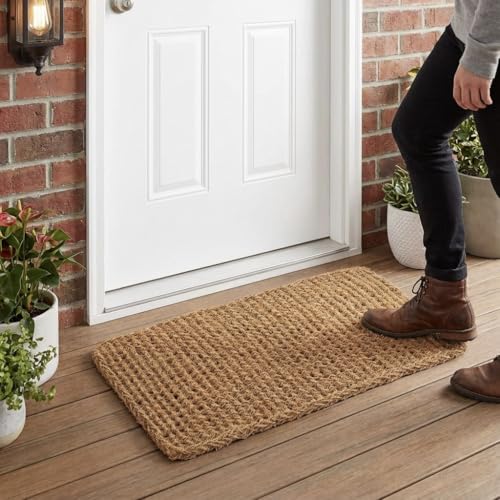
Hand-Twisted & Interwoven Coir – Dragon-weave construction twists coconut fibers into rope-like bundles and interweaves them to form the mat for dense, rigid scraping edges

FUNNY FRONTDOOR DECOR: Welcome your guests with a touch of humor using the BIRDROCK HOME Doormat featuring the "Go Away with a Warrant" message. Perfect for any entryway, front door, porch, or backdoor, this mat adds a playful and unique touch to your home's exterior, making it clear that dogs are part of the family.

The Malibu Collection is an indoor/outdoor area rug featuring geometric patterns in airy, neutral palettes, with playfully fringed edges; from renowned interior designer Amber Lewis in collaboration with Loloi
Mix Rattan and Reclaimed Wood for Bohemian Warmth

When you’re ready to move beyond flat, one-note bohemian rooms, introducing both rattan and reclaimed wood into the same space creates the layered warmth that defines Afrohemian style—rattan’s woven, airy patterns contrast beautifully with the dense, weathered grain of salvaged timber, giving your eye multiple textures to explore without cluttering the palette.
I achieve scale harmony by pairing a low reclaimed-wood coffee table with taller rattan-backed chairs, creating visual rhythm.
For durability tips, choose sealed rattan and stabilized reclaimed wood with protective oil.
Thoughtful finish pairing means warm-toned charcoal wood beside natural rattan.
Functional layering works when you select storage-ready wood pieces alongside lightweight, movable rattan seating for flexible arrangements.
A wicker storage cabinet can anchor one corner of your room, combining both the organic texture of woven material with the practical function needed in Afrohemian spaces.
Shop This Look

Modern Farmhouse Style: This coffee table from LIRY Collection combines a first-of-its-kind rustic white color, recessed panels, and barn door design for a refined touch. Create a cohesive look by pairing it with matching side tables, TV stands, and more


Versatile Lift-Top Design: This wood lift coffee table features an adjustable desktop that effortlessly rises to 6.3 inches, transforming it into a functional dining or work surface, perfect for small spaces or multi-purpose use.
Layer Mudcloth and Kente Textiles for Bold Pattern Play

Because pattern-on-pattern styling can overwhelm a room in seconds, I start by establishing mudcloth as the visual anchor—its hand-painted indigo geometric symbols and muted earth palette provide the quiet, textured backdrop that lets Kente‘s electric saffron stripes, emerald bands, and cobalt warp threads pop without competing.
Mudcloth’s muted geometry anchors the room, creating breathing space for Kente’s bold saffron, emerald, and cobalt to command attention without chaos.
I contrast scale deliberately, draping large Kente panels as wall art while scattering smaller mudcloth pillows across seating.
Color symbolism matters: Kente’s gold traditionally signals royalty, so I honor ethical sourcing by buying from cooperatives.
Seasonal swaps keep the look fresh, and gentle care techniques—cold water, air drying—preserve these investment pieces indefinitely.
When rotating seasonal textiles, I store delicate pieces in an ornament storage box to protect them from dust and maintain their vibrant colors between displays.
Shop This Look

REAL HAND-WOVEN KENTE CLOTH – This Sankofa Edition Kente Stole is hand-woven in Ghana, West Africa by skilled artisans with strict attention to detail – even the embroidery is carefully hand-stitched; Our Kente Cloth is made in the tradition of the Kente Cloths worn by Kings and Queens in Ghana and is the perfect graduation gift and keepsake.


Drape Throws and Blankets in Natural Linen and Cotton

Bold patterns set the stage, yet the fabrics you drape over furniture determine whether your Afrohemian space reads as curated or cluttered. I choose linen textures for breathability, draping them over sofa backs with casual tucking under one cushion to avoid stiffness. Cotton weight adds warmth when folded lengthwise at a daybed’s foot, layering smooth over crinkled for tactile depth.
I arrange throws in thirds—folded, draped, tossed—to balance intention with ease. Rolling extras into basket storage beside seating keeps them accessible while reinforcing artisan charm, and seasonal swaps refresh your palette without major redesign. Investing in designer throw blankets elevates the entire room’s aesthetic while honoring the cultural textures at the heart of Afrohemian style.
Pair Bold Tribal Prints With Neutral Solid Fabrics

Tribal prints carry so much visual weight that I’ve learned to honor their intensity by surrounding them with stretches of calm, neutral fabric—an approach that lets each pattern breathe instead of shouting over its neighbors.
I apply pattern placement rules by limiting bold motifs to one focal piece, then balancing with textural pairings like nubby linen or slubby cotton that echo woven depth. Contrast scales by pairing large tribal designs with solid fabrics in similar neutral undertones, reserving smaller prints for pillows. Color pick accents from the print—rust, indigo—to unify without adding competing patterns. To display these textiles at varying heights and create dimensional interest, I use modern plant stands to showcase draped fabrics alongside greenery throughout the room.
Layer Hand-Dyed Indigo Pillows for Rich Color

I’ve discovered that stacking hand-dyed indigo pillows transforms a neutral sofa into a saturated focal point, where each piece contributes its own shade of blue—from deep midnight to faded denim—without requiring a single additional color.
I layer shibori, tie-dye, and dip-dye patterns to manipulate pattern scale, then anchor them with linen cases for texture mixing.
Varying fills—kapok, down alternative, or buckwheat—change how each pillow sits, so pillow placement feels organic rather than staged.
I rotate pieces seasonally and follow care tips: cold-water washes and shade-dry only.
One ochre-fringed accent pillow bridges indigo’s cool intensity with Afrohemian warmth.
When I want to elevate the entire arrangement, I introduce velvet throw pillows in jewel tones that catch light differently throughout the day and add a luxurious tactile contrast to the hand-dyed cotton.
Hang African Woven Wall Tapestries for Texture and Story

When a room lacks warmth despite all the right furniture, a hand-woven African tapestry can anchor the space with instant soul, introducing layered texture and storytelling that mass-produced art simply can’t replicate.
I hang mine at eye level using a wooden dowel to preserve the weave’s integrity while showcasing symbolic motifs from West African artisan sourcing.
Mixing scales—one oversized piece or a grouped gallery—creates visual impact. I pair tapestries with ochre walls and nearby woven baskets for curated vignettes.
For care preservation, I rotate pieces seasonally, keeping fibers fresh while maintaining that layered, cultured aesthetic. Complementing wall textiles with woven plant baskets at ground level continues the handcrafted narrative while adding functional beauty to your space.
Frame African Art Prints or Vintage Travel Posters

A carefully framed print transforms flat paper into a statement piece that anchors an entire wall, especially when you’re working with bold African artwork or mid-century travel posters that deserve the same reverence as museum-quality originals.
I choose matte finishes in warm walnut or sleek black metal to unify my gallery wall, then invest in archival mounting and acid-free mat board to protect printable sizes from fading. Frame spacers add subtle depth, while gallery lighting—a slim LED picture lamp or track spots—highlights textures and colors, turning a simple poster into a focal point that tells your story with sophistication. For an elevated reflective accent that amplifies both light and the visual impact of your curated wall, consider adding a gold framed mirror nearby to create dimension and bounce warmth throughout the space.
Lean Large Mirrors Against Walls to Expand Small Spaces

In tight quarters where every square foot counts, leaning an oversized floor mirror against the wall instead of hanging it delivers instant breathing room and a laid-back elegance that complements the Afrohemian ethos perfectly.
I recommend choosing a frame that spans at least 60–70% of your wall height, then positioning it opposite a window for ideal light doubling—you’ll see up to 40% more brightness reflected into dim corners.
Angle it slightly backward for clever proportion play that draws eyes upward, amplifying ceiling height.
Surround your mirror placement with woven baskets and trailing greenery for reflective styling that adds depth without sacrificing precious floor space.
For maximum impact in your design scheme, explore oversized wall mirrors that can serve as both functional reflective surfaces and statement pieces that elevate the entire atmosphere of your room.
Display Handcrafted Pottery and Ceramic Vessels

Nothing transforms a flat vignette into a layered, lived-in story quite like handcrafted pottery and ceramic vessels—pieces that carry the fingerprints, brush strokes, and kiln quirks of their makers.
I prioritize maker-focused selection, choosing terracotta urns with visible throwing marks alongside indigo-glazed bowls that provide texture contrast. Scale variation is essential: I group tall floor vases with medium table pieces and small cups in odd-number surface groupings on shelves or mantels. Functional display integrates daily ritual—planters holding greenery, lidded jars storing treasures, water pitchers poised for use—blending artistry with authentic, soulful living.
Use Carved Wood Sculptures as Focal Point Accents

Carved wood sculptures command attention in ways soft textiles and flat wall art cannot, anchoring an Afrohemian space with dimensional presence and tactile weight that pulls the eye across a room. I position large pieces on pedestals near windows where directional lighting reveals every groove, creating scale contrasts against smaller grouped figures on shelves.
Cross cultural motifs—from Makonde forms to diasporic reinterpretations—tell layered stories when paired with brass bowls or woven baskets. Patina care matters: I oil my teak and mahogany annually, keeping humidity stable to prevent cracks while honoring these pieces as living art that deepens with time.
Add Brass and Copper for Warm Metallic Pops

Brass and copper bring a lived-in warmth to Afrohemian spaces that cooler metals like chrome or nickel simply can’t replicate, their amber and rose tones acting as visual bridges between deep indigo pillows, ochre throws, and the raw sienna of mudcloth wall hangings.
I layer aged brass candlesticks alongside copper trays on coffee tables, letting their patina finish tell stories of craftsmanship while metallic texture catches afternoon light.
These artisanal accents create warm reflections that bounce subtly across woven baskets and rattan furniture, adding dimensional glow without competing against bold African prints or hand-carved wood sculptures you’ve already positioned as anchors.
Build Low Seating Nooks With Oversized Floor Poufs

Lowering your seating plane to floor level shifts the entire energy of an Afrohemian room, transforming corners into intimate conversation nooks where guests instinctively linger longer, lean in closer, and settle into unhurried storytelling.
I arrange three to five oversized poufs—30 to 40 inches wide, filled with high-density foam—around low tables and layered rugs to form conversation circles that feel intentional, not improvised.
I anchor each cluster with floor cushions, textured throws, and soft lighting positioned 18 to 30 inches above, mixing mudcloth and bold prints to echo Afrohemian texture and visual depth.
Shop This Look

【STORAGE OTTOMAN FEATURES】: This UNSTUFFED Ottoman/Pouf with storage, featuring a hidden storage ottoman that seamlessly organizes throw blankets storage, decorative pillows organizer, seasonal clothing storage, and plush toy organizer. You can also use memory foam as a filling material.

Extremely Comfortable Pouf Ottoman Stuffed: This pouf ottoman cover adopts plush fiber with thick backing,fluffy and durable, holds its shape perfectly,gives a softest feeling for your feet with our fluffy ottoman foot rest.

Boho-Chic Texture: This poofy ottoman is densely woven with 100 % cotton yarn; the boho footstool in our sitting ottoman is a great addition if you're looking for accent stools for the living room.
Stack Books and Personal Mementos on Low Shelving

Books piled horizontally transform low shelving into a landscape of varying elevations, offering natural pedestals for the ceramics, woven baskets, and framed portraits that anchor Afrohemian storytelling in personal history rather than catalog perfection.
Stacked books become elevation for objects that tell stories rooted in memory, not manufactured design ideals.
I arrange two to four mementos atop each stack, layering brass trinkets with wrapped textiles to create tactile contrasts and heirloom sequencing.
Mixing spine-facing volumes with face-out covers introduces color blocking that echoes mudcloth patterns, while wooden trays beneath delicate pieces add scale rhythm.
I leave three to four inches between clusters, letting negative space translate travel narratives into curated vignettes rather than crowded displays.
Use Wicker Baskets for Stylish, Functional Storage

Wicker baskets solve storage challenges while reinforcing the natural-material foundation that makes Afrohemian spaces feel grounded and intentional, their hand-woven textures echoing the same artisan quality found in mudcloth throws and macramé wall hangings.
I layer different weave densities for seasonal swapping of throws and pillows, add fragrance sachets inside lidded versions to scent linens naturally, and choose tight-weave styles for pet safe storage of cords or small objects.
Childproofing baskets with soft liners prevents pinched fingers, while upcycled finishes—dip-dyed rims or painted geometric patterns—transform affordable finds into personalized statement pieces that organize with soul.
Group Potted Plants for Lush, Layered Greenery

Because plants breathe life into even the smallest corner, I arrange mine in odd-numbered clusters—typically three to five pots—at staggered heights that echo the wild, unplanned abundance of forest floors and terraced gardens.
I pair tall palms with bushy mid-level specimens and trailing vines, then select cohesive pots in woven, terracotta, or glazed finishes.
Vertical planters maximize square footage, while seasonal rotation guarantees each receives proper light.
I match humidity grouping and soil mixes by care needs, anchor the display on a tray with miniature sundries like stones or driftwood, and position everything near bright, indirect windows.
Add Macramé Plant Hangers for Vertical Interest

I thread macramé hangers into my vertical design strategy whenever I need to reclaim precious floor real estate while injecting that handcrafted, bohemian warmth Afrohemian spaces crave.
Macramé hangers reclaim vertical space while layering handcrafted bohemian texture into every Afrohemian corner that craves soulful warmth.
I select knot pattern variations in jute or cotton rope, staggering three hangers at different heights to create gallery-worthy depth.
Mini planter choices—terra-cotta or lightweight ceramic—pair with trailing pothos or philodendron for cascading greenery that softens bold mudcloth prints below.
I secure ceiling anchor options rated for full load capacity, always testing with pot, soil, and water weight.
Plant care pairing and fiber care tips assure longevity, maintaining that lived-in, soulful aesthetic.
Install Woven Pendant Lights for Soft, Ambient Glow

Whenever I’m asked how to anchor an Afrohemian room’s lighting scheme without sacrificing that handmade, soulful vibe, I immediately point to woven pendant lights—fixtures crafted from rattan, seagrass, sisal, or jute that filter incandescent or LED bulbs through organic fibers, casting a honeyed, diffused glow across walls and furnishings.
I hang them at height variations—clustered over sofas or staggered above side tables—to layer ambient light and emphasize vertical texture. Open-weave designs project shadow patterns that add depth, while warm bulb choice (2700K LEDs) preserves earthy tones.
For maintenance tips, dust natural fiber shades monthly with a soft brush to prevent buildup and retain their artisanal appeal.
Layer Ambient, Task, and Accent Lighting for Depth

Depth in an Afrohemian room doesn’t arrive from paint alone—it emerges when you layer ambient, task, and accent lighting into at least three distinct levels that you can dial up or down throughout the day.
Install dimmer zoning on separate circuits so your overhead fixtures, reading lamps, and focal uplighting operate independently, creating moods from bright cleaning mode to low evening ritual. Choose warm bulb temperatures around 2700–3000K for most layered fixtures, then add cooler 3000–3500K task lights where you work. Position accent spots at 30°–45° angles for glare control, highlighting mudcloth tapestries and handcrafted pieces without washing them out.
Display Beaded Artifacts and Woven Trays on Surfaces

Across a console or coffee table, beaded artifacts and woven trays deserve intentional placement that tells a visual story rather than cluttering valuable real estate. I group pieces in odd numbers—three or five—to create balance, layering a shallow tray beneath smaller beaded bowls for surface protection and depth.
Varied heights guide the eye, while seasonal rotation keeps displays fresh and honors provenance tags that share each item’s origin. Lighting interplay highlights texture, especially when accent spots graze tight beadwork. Interactive arrangement invites touch and rearrangement, making your surfaces dynamic rather than static museum shelves.
Balance Vintage African Artifacts With Modern Bohemian Furniture

Pairing a hand-carved Senegalese stool with a sleek mid-century armchair transforms both pieces into conversation starters, each amplifying the other’s character through thoughtful contrast rather than aesthetic compromise.
I rely on scale contrasts—placing a monumental carved mask above minimalist rattan seating—to create visual tension. Material pairing matters: weathered wood gains impact beside linen upholstery.
Through curatorial editing, I display fewer artifacts with intentional negative space around each. I share provenance storytelling by positioning heirloom pieces near modern shelving, letting their histories breathe.
This approach honors heritage while embracing contemporary comfort, making every corner feel both collected and cohesive.
Frequently Asked Questions
What Decorating Style Never Goes Out of Style?
I’ve found that timeless minimalism, classic modernism, heritage maximalism, neutral bohemian, and evergreen eclecticism never fade because they’re rooted in quality materials, balanced proportions, and personal storytelling—principles that transcend fleeting trends.
Is Boho Decor Out of Style in 2025?
Boho’s evolved, not extinct—I’m seeing it thrive through eclectic layering, textured neutrals, and global accents. Modern macramé and curated vintage pieces now replace mass-produced clichés, creating culturally intentional spaces that feel both innovative and soulful.


